Home
>
Blog
>
>
Where Legal Nurse Review Adds Value to AI Deposition Summaries
Key Takeaways
- AI-assisted review can classify testimony and prepare a first-pass deposition summary, but it cannot be treated as the final clinical-context check.
- A legal nurse consultant separates the witness's words from counsel's question, an exhibit's contents, and the medical record itself.
- Clinical terminology should be clarified without changing the testimony or adding a diagnosis that the witness did not give.
- Dates, providers, procedures, medications, prior history, and functional statements need page-line support and careful attribution.
- When a conflict cannot be resolved from the supplied sources, the summary should flag it instead of choosing a version.
- The attorney remains responsible for credibility, legal meaning, strategy, and case decisions.
Legal nurse review adds value to AI deposition summaries by checking medical terminology, testimony context, treatment chronology, source attribution, qualifiers, and conflicts against the transcript and supplied records before delivery. AI can organize a first pass. The legal nurse consultant tests whether the medical meaning survived that compression, then leaves the legal significance to the attorney.
The Value Starts Where Transcript Extraction Stops
Legal nurse review adds its clearest value after AI has organized the transcript but before the deposition summary reaches the attorney as a finished deliverable. The legal nurse consultant checks whether medical testimony was understood in context, tied to the correct speaker and source, and summarized with the same limits the witness expressed.
That gap matters because an AI draft can be clean, searchable, and grammatically correct while still flattening a qualified answer. It may merge two encounters, treat a medication mention as current use, or describe counsel's wording as if it came from the witness. A legal nurse reviewer reads the exchange as testimony, not as isolated text fragments.
The legal nurse does not decide whether a witness is credible or whether a medical fact proves causation, damages, liability, or standard of care. The work is narrower and practical: preserve what was said, clarify the clinical language, flag what does not line up, and keep every material point traceable for counsel.
Clinical review should reduce rereading without separating counsel from the transcript.
The summary earns trust when an attorney can move from the medical point to the exact page-line passage and understand why the wording was retained.
AI Organizes the First Pass; the LNC Tests Medical Meaning
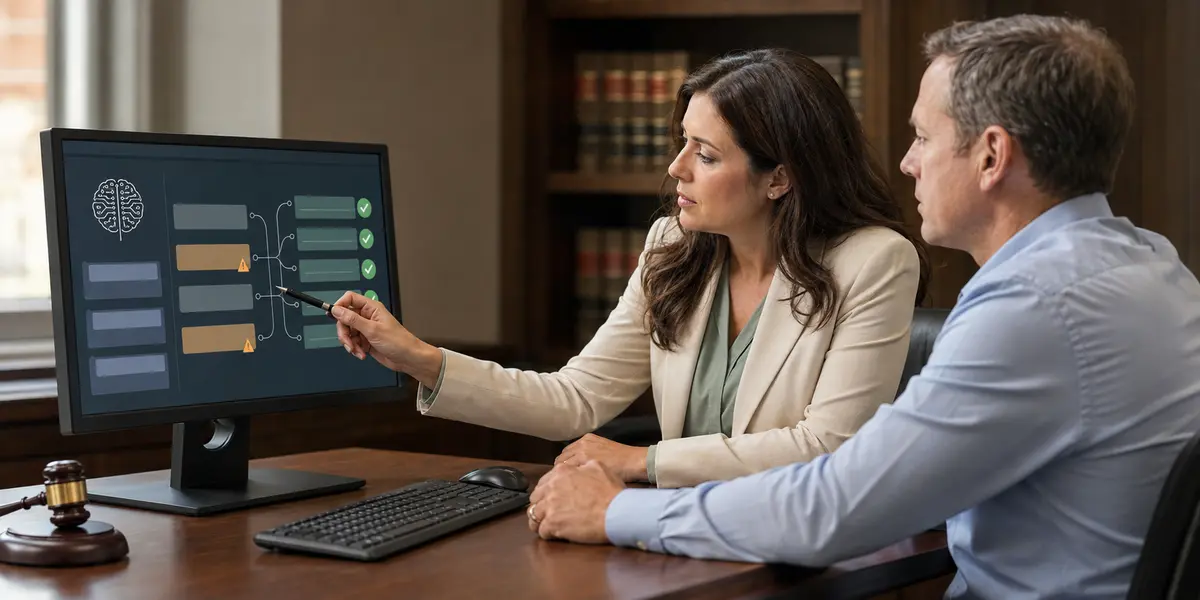
AI-assisted review is useful for identifying speakers, grouping topics, locating dates, and drafting a first-pass deposition summary. For the broader picture of what those tools do, see the benefits of AI deposition summaries for law firms. A legal nurse consultant adds the clinical reading needed to test whether those extracted pieces still mean what the witness meant in the full exchange.
Medical testimony rarely arrives in textbook language. A claimant may say a disc was 'slipped.' A physician may distinguish between radiographic findings and symptoms. A witness may report taking a medication, then clarify that it was stopped months earlier. The draft can capture the right words and still state the wrong status.
The LNC checks the question, answer, follow-up, correction, and nearby exhibit discussion together. If the witness was uncertain, the summary stays uncertain. If the witness repeated counsel's terminology without adopting it, the attribution stays visible. This is the same source-first discipline covered in our deposition-summary accuracy checks for law firms.
Clinical Terms Are Clarified Without Rewriting the Testimony
A legal nurse consultant clarifies clinical terminology while preserving the witness's actual level of knowledge. The reviewer may define a term for the attorney, but the summary should not convert everyday language into a diagnosis or replace a witness's description with a stronger medical conclusion.
Suppose a witness says, 'They told me there was pressure on a nerve,' while an exhibit shown later refers to foraminal stenosis. The summary can state both facts with separate attribution: what the witness recalled and what the exhibit was described as showing. It should not write that the witness was diagnosed with foraminal stenosis unless the testimony or supplied medical source supports that statement.
The same restraint applies to prognosis, disability, restrictions, and treatment response. A claimant's account, a treating provider's testimony, and a chart entry are three different sources. The LNC keeps those source labels attached. That lets the attorney see the distinction without asking the reviewer to decide which source controls.
Questions, Answers, Exhibits, and Records Stay Separate
Legal nurse review adds value by keeping four information streams separate: counsel's question, the witness's answer, the exhibit discussed, and the underlying medical record. AI can blend these streams when they use similar wording or appear within the same page range.
A leading question may contain a date, diagnosis, and procedure before the witness answers, 'I don't remember.' The summary should capture the lack of recall, not adopt every fact embedded in the question. An exhibit may list a medication that the witness denies taking. Again, both items may matter, but they are not interchangeable.
This is why strong summaries preserve context before shortening the transcript. Page-line citations help, but the cited passage must also show who supplied the information and whether it was accepted, denied, corrected, or left unresolved.
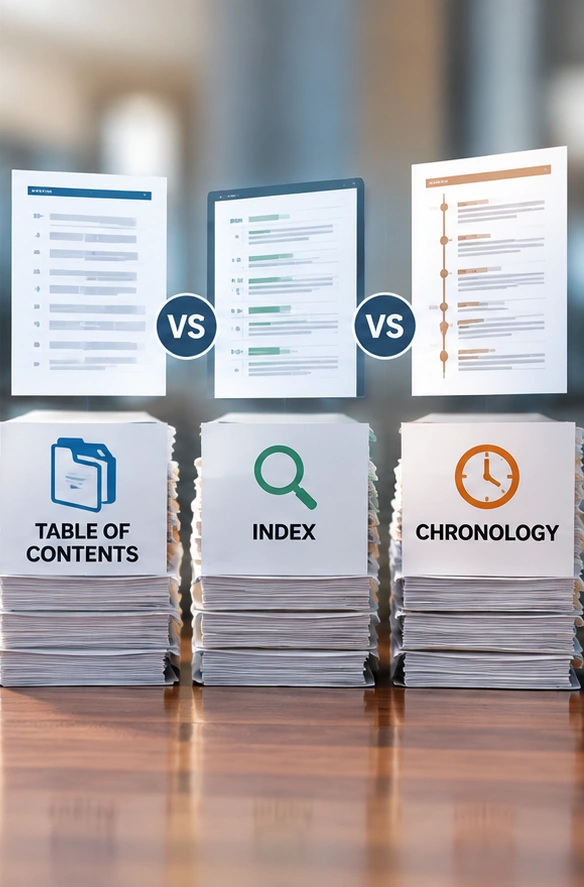
See the Finished Formats Before Choosing One
Treatment Chronology Gets a Clinical Consistency Check
A legal nurse consultant checks whether dates, providers, body parts, procedures, medications, and reported responses form a faithful treatment sequence. The purpose is to catch compression errors and visible conflicts, not to decide what the sequence proves.
Depositions move backward and forward in time. A witness may discuss the incident, jump to surgery, return to prior symptoms, and then correct the month of the first specialist visit. AI can group each topic while losing the correction that came later. The LNC follows the sequence across the transcript and compares it with any supplied records under the assignment scope.
Useful flags include a procedure date that changes during testimony, a provider named in the transcript but absent from the supplied file, a medication timeline that conflicts with a chart entry, or a treatment gap that the witness explains differently in separate answers. The summary presents the versions and their citations. Counsel decides what further inquiry or use is appropriate.
Qualifiers and Functional Statements Need Close Reading
Legal nurse review protects the qualifiers that control the meaning of symptom and function testimony. Words such as sometimes, since, before, after, with help, for a few minutes, and on a good day can change a broad statement into a limited one.
AI may compress 'I can lift a grocery bag if someone places it on the counter' into 'The witness can lift grocery bags.' The shorter sentence reads smoothly. It also removes the assistance and starting position that defined the answer. An LNC checks daily-activity statements against the surrounding questions and retains the conditions the witness described.
The same check applies to pain scores, work restrictions, sleep, driving, household tasks, assistive devices, and treatment response. The reviewer does not rate impairment or assess damages. The reviewer keeps the testimony precise enough for the attorney and retained expert to make their own evaluations.
Medical Expert and Fact Witness Depositions Need Different Emphasis
Legal nurse review should change with the witness type because medical experts and fact witnesses supply different kinds of information. An expert's summary needs the stated opinion, basis, methodology, materials reviewed, and clinical wording. A fact witness summary needs firsthand observations, sequence, limitations, and attribution.
For a treating provider, the LNC may track how the witness explains a diagnosis, test result, procedure, treatment recommendation, and later change in plan. For a claimant or family witness, the review focuses on what the person observed or reported, without turning lay testimony into clinical evidence.
Our guide to medical-expert and fact-witness deposition summaries explains why a single format should not erase these differences. The legal nurse contribution is strongest when the testimony contains medical language, treatment sequence, or record-to-testimony comparisons.
The LNC should make the medical testimony easier to verify, not sound more certain than the witness was.
Human Quality Control Needs a Defined Review Path
An AI-assisted deposition summary receives meaningful human quality control when the review path names the checks performed, the reviewer responsible, and the exceptions that remain. A generic 'human reviewed' label does not show what was tested.
For medically focused testimony, the legal nurse review can follow five checkpoints:
- Source check: confirm the transcript version, errata status, exhibits, and assignment scope.
- Testimony check: verify speakers, page-line citations, questions, answers, corrections, and uncertainty.
- Clinical-context check: confirm terminology, treatment sequence, medication status, and source attribution.
- Conflict check: compare relevant transcript statements with supplied records and flag unresolved differences.
- Delivery check: confirm the requested format, issue labels, hyperlinks, version, and final human sign-off.
One correction should also trigger a pattern check. If the draft confused a question with an answer once, the reviewer should search for the same failure elsewhere. Quality control works at the pattern level, not only at the sentence that happened to be noticed first.
A Published Workflow Result Shows the Capacity Benefit
A published LezDo TechMed case study shows that organized deposition work can release professional review time when it sits inside a larger controlled workflow. An anonymized California neurosurgery IME firm reported 44% faster deposition analysis, a 62% reduction in review time, and 40% faster case processing during the engagement.
Those results belong to one client situation and should not be treated as a universal benchmark. The useful lesson for attorneys is simpler: AI-assisted organization creates capacity only when human review prevents the receiving team from reopening the transcript to repair context, terminology, or citations.
Speed that transfers correction work to the law firm is not a gain. A sound workflow saves time at the attorney's desk because the medical testimony arrives organized, source-linked, and checked by someone who understands the clinical language.
How LezDo TechMed Supports AI-Assisted Deposition Review
LezDo TechMed supports attorneys with deposition summary services that combine AI-assisted transcript organization with human review and medical-context checks. The workflow can be adjusted to page-line, pagewise, topic-based, chronological, or narrative formats, with citations and issue labels matched to the assignment.
For medically focused depositions, trained reviewers can identify treatment testimony, prior history, medication statements, diagnostic references, procedures, functional accounts, and visible conflicts with supplied records. Human quality control checks context, attribution, citation support, and delivery instructions before the summary is released.
LezDo TechMed organizes and flags documented testimony and medical information for attorney review. It does not decide credibility, diagnose, determine causation or liability, assess damages, give a standard-of-care opinion, or replace counsel or a retained medical expert.
Case-Specific Results From One Published Engagement
44%
Faster deposition analysis
Reported by an anonymized California neurosurgery IME firm
62%
Less review time
Reported during the same published engagement
40%
Faster case processing
Case-specific result, not a universal guarantee
Frequently Asked Questions
What does a legal nurse consultant review in a deposition summary?

A legal nurse consultant checks medical terminology, treatment sequence, medication and procedure references, functional testimony, source attribution, conflicts, and page-line support within the assigned scope.
Can AI prepare a deposition summary without human review?
AI can assist with transcript classification, topic grouping, extraction, and first-pass drafting. A trained human should review the summary for context, source support, attribution, and assignment-specific accuracy before delivery.
Why is legal nurse review useful for medical testimony?
Legal nurse review helps preserve clinical meaning when witnesses use informal terms, discuss complex treatment, change dates, qualify symptoms, or refer to records and exhibits during testimony.
Does an LNC decide whether deposition testimony is credible?
No. The LNC organizes and flags testimony and documented medical information. Credibility and legal significance remain with the attorney or other qualified decision-maker.
How should conflicts between testimony and medical records be handled?
The summary should present each source accurately, cite where the difference appears, and label the conflict unresolved when the supplied materials do not reconcile it.
Should a deposition summary translate all medical terms?
Clinical terms may be explained for readability, but the explanation should not replace the witness's wording, add a diagnosis, or make the testimony sound more certain.
What deposition summary format works best for attorneys?
The best format depends on the next use. Page-line summaries support verification, topic-based summaries support issue review, chronological summaries support sequence, and narrative summaries support continuous reading.
What should block delivery of an AI-assisted deposition summary?
Delivery should stop when material statements lack source support, citations are wrong, medical meaning has changed, speakers are confused, key scope items are missing, or unresolved error patterns remain.
The Bottom Line
Legal nurse review adds value to AI deposition summaries at the points where medical language, testimony context, chronology, and source attribution can change the reader's understanding. AI can reduce first-pass work. The LNC checks whether the draft still reflects what the witness said and where the support appears.
That division of work matters. The reviewer organizes and flags the medical testimony. The attorney decides what the testimony means for credibility, strategy, liability, causation, damages, or the next case step.
Refer to our blog, 'When Is an AI-Generated Deposition Summary Ready for Human Approval?' to learn the source, meaning, attribution, scope, exception, and version checks that should be completed before an AI-assisted draft is approved.
Source Credit : All metrics derived from LezDo TechMed’s internal project data.
Jebisha Jenishofen
Jebisha Jenishofen is a Certified Legal Nurse Consultant and Medical–Legal Research Analyst with over five years of experience in the medical-legal industry. She specializes in medical record analysis, medical-legal research, and content development, creating clear and informative resources on personal injury, medical malpractice, insurance claims, and healthcare litigation. By combining clinical knowledge with research expertise, she transforms complex medical information into practical insights for medical-legal professionals.












.png)


