Home
>
Blog
>
>
Medical Expert Depositions vs Fact Witness Depositions: What Each Summary Must Capture
Here's why a medical expert deposition and a fact witness deposition need different summaries:
- Different testimony, different emphasis – An expert gives opinions and methodology; a fact witness gives observations and a timeline. One summary shape hides what matters in the other.
- Expert summary keeps the basis – Every opinion needs the reasoning, the methodology, and the exact clinical wording behind it, not just the conclusion.
- Fact summary keeps the sequence – Firsthand observations, the dated timeline, and admissions, pinned to page and line.
- The cross-reference differs too – Expert testimony maps to the records and prior reports; fact testimony maps to other witnesses and events.
Read on for what each summary must capture, and why ordering one generic version loses the case's detail.
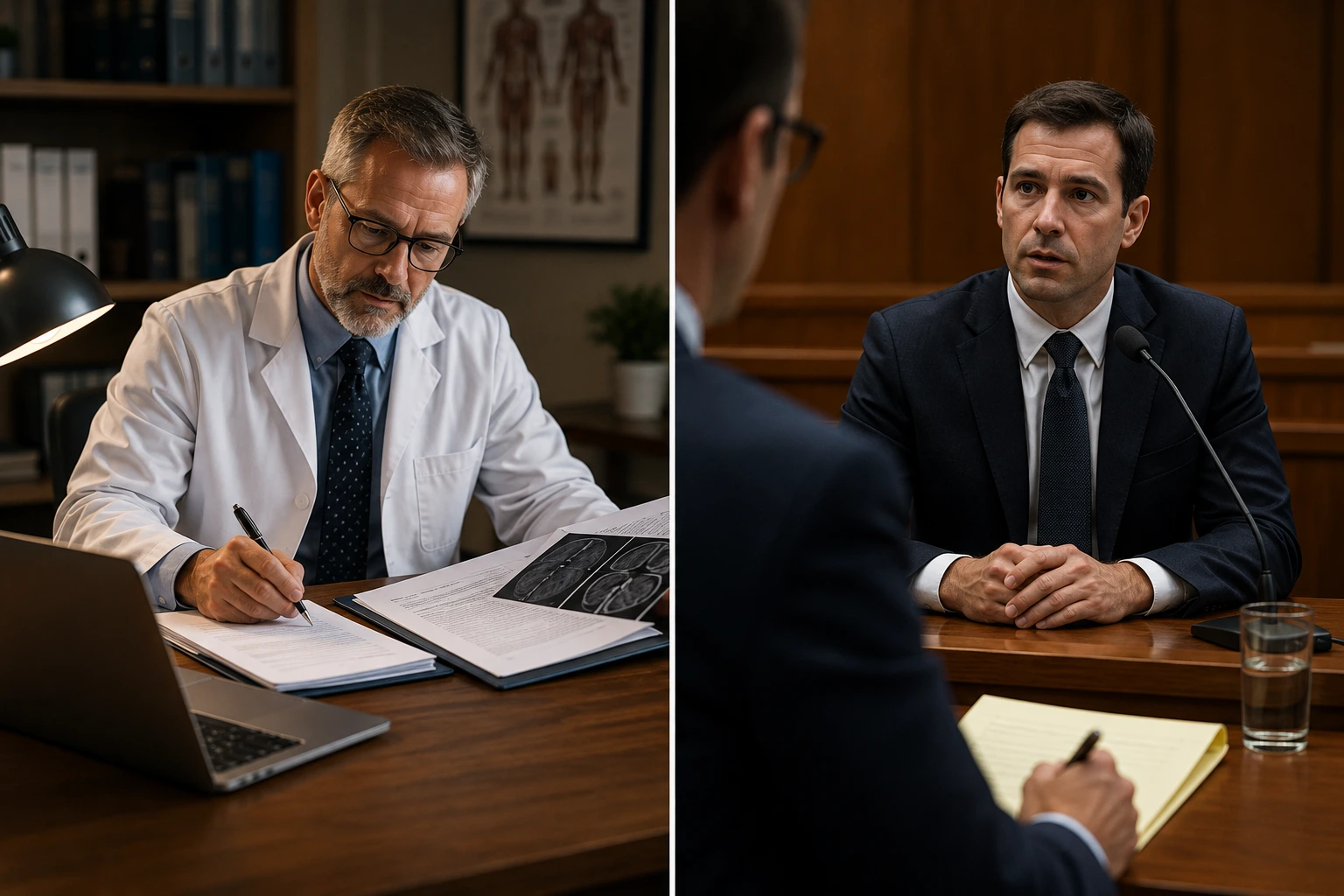
A medical expert deposition and a fact witness deposition carry different testimony, so a summary built for one actively hides what matters in the other. Order the same generic summary for both and you lose the expert's methodology or the fact witness's admission, whichever the template was not shaped for. Ever opened a summary of an expert depo and found the conclusion preserved but the reasoning behind it gone? That is the mismatch worth fixing before the next order.
Two quick definitions. A medical expert deposition is testimony from a retained or treating expert, carrying opinions, the basis for each, methodology, credentials, and clinical terminology. A fact witness deposition is testimony from a lay witness about what they personally saw, did, or experienced, carrying firsthand observations, a timeline, and admissions. The content is different in kind, not just degree, and the summary has to follow. Let's compare what each one must capture.
Why one summary format can't serve both
The mismatch is not about quality, it is about emphasis. A summary that flows an expert's testimony into readable narrative can smooth over the exact methodology and the stated basis for each opinion, which is precisely what a deposition of an expert exists to pin down. A summary built to preserve every clinical qualifier can bury a fact witness's plain timeline in detail that witness never needed. What helps one hurts the other. The fix is matching the summary's emphasis to what the testimony actually carries, which starts with knowing, or saying, which kind of deposition it is.
Faster review, without losing the detail that matters
One California IME firm restructured its deposition review workflow and reported deposition analysis running about 44% faster, without losing the page-line detail its attorneys relied on.
What a medical expert deposition summary must capture
An expert deposition summary earns its keep at the basis, not the conclusion. For each opinion the expert gave, the summary should preserve the stated reasoning, the methodology described, and the materials the expert said they relied on, with the exact clinical wording kept where it matters rather than paraphrased into something looser. Credentials and the scope of the opinion belong in it too. And the cross-reference is specific: expert testimony maps back to the medical records, the prior reports, and any earlier testimony, so where the expert's account and the documentation diverge is flagged and sourced. That mapping is where a deposition of an expert earns its value. Reviewing that kind of testimony well is its own discipline, which is why reviewing a defense expert's deposition transcript is worth its own approach, and why LezDo TechMed's deposition summary services can be built to the witness type rather than a single house format.
Want to see what an expert and a fact witness summary each look like?
What a fact witness deposition summary must capture
A fact witness summary earns its keep at the timeline and the admissions. What the witness personally observed, in what order, on what dates, is the spine of it, and that reads best as a clear sequence rather than smoothed prose. Admissions and inconsistencies get pulled out and pinned to their page and line, so they lift straight into a cross outline or a motion. The cross-reference is different from the expert's: fact testimony maps against other witnesses' accounts and the documented timeline of events, not against clinical literature. Because the emphasis shifts this much between witness types, matching the summary format to how the testimony will be used is a decision worth making per deposition, not once for the whole case.
An expert deposition lives at the basis for each opinion. A fact witness deposition lives at the timeline and the admissions.
The line the summary does not cross, for either witness
Here is the boundary that holds for both. A deposition summary organizes and condenses the testimony, preserves the exact words where they matter, cites each point to its page and line, and flags where the testimony diverges from the records or from other testimony. It does not decide whether the expert's opinion is sound, whether a witness is credible, or how the case should come out. For an expert, that means the summary captures the opinion and the basis the expert gave, not a judgment on whether the methodology holds. For a fact witness, it means the admissions and inconsistencies are surfaced and sourced, not weighed. Those calls are the attorney's and the retained expert's.
AI helps on both, within limits. It indexes testimony and builds a first pass across a long transcript faster than a person alone, whether the deponent is an expert or a fact witness. Whether an expert's stated basis actually connects to the opinion, or a fact witness's account genuinely conflicts with another's, still takes a trained reviewer who understands both the clinical content and the evidentiary weight. So a dependable summary of either pairs AI indexing with human review.
A gut-check before your next order: are you telling the summarizer which kind of deposition this is, or assuming one format fits both? If it is the second, name the witness type up front, and the summary comes back shaped to what the testimony carries.
What each deposition summary is built to carry
Expert
Opinion and basis
Each opinion with the stated reasoning, methodology, and exact clinical wording, cross-referenced to the records.
Fact witness
Timeline and admissions
Firsthand observations, the dated sequence, and admissions pinned to page and line.
Both
Page-line and QC
Sourced to the right reference and checked by human reviewers before the summary reaches you.
Frequently asked questions
What is the difference between a medical expert deposition and a fact witness deposition?

A medical expert deposition carries opinion testimony, the basis and methodology behind each opinion, credentials, and clinical terminology. A fact witness deposition carries firsthand observations, a timeline of events, and admissions. The content differs in kind, so the summaries have to be built differently.
Why can't the same deposition summary format serve both witness types?
The emphasis that captures one hides the other. A narrative flow can smooth over an expert's methodology, and heavy clinical detail can bury a fact witness's plain timeline. Matching the summary's emphasis to what the testimony carries is what keeps the important detail from being lost.
What must a medical expert deposition summary capture?
Each opinion with the stated reasoning and methodology behind it, the materials the expert relied on, the credentials and scope, and the exact clinical wording where it matters, all cross-referenced to the records and prior reports so divergences are flagged and sourced.
What must a fact witness deposition summary capture?
The firsthand observations, the dated timeline of what the witness saw or did, and the admissions and inconsistencies, pinned to page and line and cross-referenced against other witnesses' accounts and the documented sequence of events.
Does a deposition summary judge the expert's opinion or the witness's credibility?
No. The summary organizes and condenses the testimony, preserves the exact words, cites each point, and flags where the testimony diverges from the records or other testimony. Whether the opinion is sound and whether a witness is credible are the attorney's and retained expert's determinations.
Should I tell the provider which witness type the deposition is?
Yes. Naming the witness type up front lets the summary be built to what the testimony carries, an expert summary shaped around opinion and basis, a fact witness summary shaped around timeline and admissions, rather than a single generic format that fits neither well.
Bringing it back to your case
A medical expert deposition and a fact witness deposition are two different kinds of testimony, and the summary of each has to be built for what it carries. The expert summary preserves every opinion with its basis, methodology, and exact wording, cross-referenced to the records. The fact witness summary pins the timeline, the observations, and the admissions to page and line, cross-referenced to the other witnesses and events. Order the same generic version for both and you lose whichever detail the template was not shaped for. Name the witness type, and each summary comes back ready to use.
The boundary holds throughout: the summary organizes, condenses, cites, and flags. Whether the opinion is sound and whether the witness is credible stay with you. The summary just makes sure the testimony that matters is captured in the shape the case needs.
Ready to order deposition summaries built to the witness type? Partner with LezDo TechMed, or start with a free trial case.
Source Credit : All metrics derived from LezDo TechMed’s internal project data.
Anjana Devi Vijay
Anjana Devi Vijay is a Certified Legal Nurse Consultant (CLNC) and Medical–Legal Research Analyst with 9+ years of experience in medical record review, deposition summary analysis, and medico-legal research. She specializes in transforming complex healthcare documentation into accurate, actionable insights that support attorneys, insurers, and medical evaluators. With expertise in clinical documentation analysis and legal case support, she creates research-driven content focused on improving decision-making and case outcomes.













.png)