Home
>
Blog
>
>
A Step-by-Step Guide to Building Source-Linked Chronology Entries
Key Takeaways
- Build each entry around the date of service, facility, responsible provider, record type, and exact source reference.
- Separate the treating provider, note author, signing provider, ordering provider, and interpreting provider when the record assigns different roles.
- Cite the original diagnostic or procedural report when it is available, rather than relying only on a later note that repeats the result.
- Label uncertain authorship, conflicting dates, and missing referenced reports. Do not fill those gaps with assumptions.
- Test every page reference and hyperlink during human quality control before the medical chronology is delivered.
Source-linked chronology entries are built by pairing each summarized medical event with four anchors: the event date, the facility, the responsible provider, and the exact source reference. A reviewer then checks that the cited page supports the wording, distinguishes an original report from a repeated reference, and flags uncertain authorship instead of guessing.
The harder part is keeping those anchors together when one encounter appears across an order, a technician worksheet, a radiology report, a progress note, and a billing page.
Defense attorneys need that precision because a clean sentence can still send the reader to the wrong clinician or the wrong page. If a lumbar MRI impression is attributed to the ordering orthopedist when it was interpreted by a radiologist, the treatment sequence may remain readable, but the source trail is inaccurate. If the citation opens a later office note instead of the original imaging report, counsel has to verify the result twice.
A useful medical chronology reduces that rechecking. LezDo TechMed's article on how to trace every key date back to the record explains the verification test from the reader's side. The steps below focus on the builder's side: how the entry is assembled before the defense team receives it.
Source Linking Begins Before the First Entry Is Written
Source linking begins with a stable record set, a clear citation convention, and a defined scope. Drafting first and adding citations later invites mismatches because pages may be reordered, duplicates removed, or supplemental records inserted after the event text has already been written.
Before review starts, confirm the included files, controlling page identifier, and method for labeling supplements. One citation convention should control the final chronology.
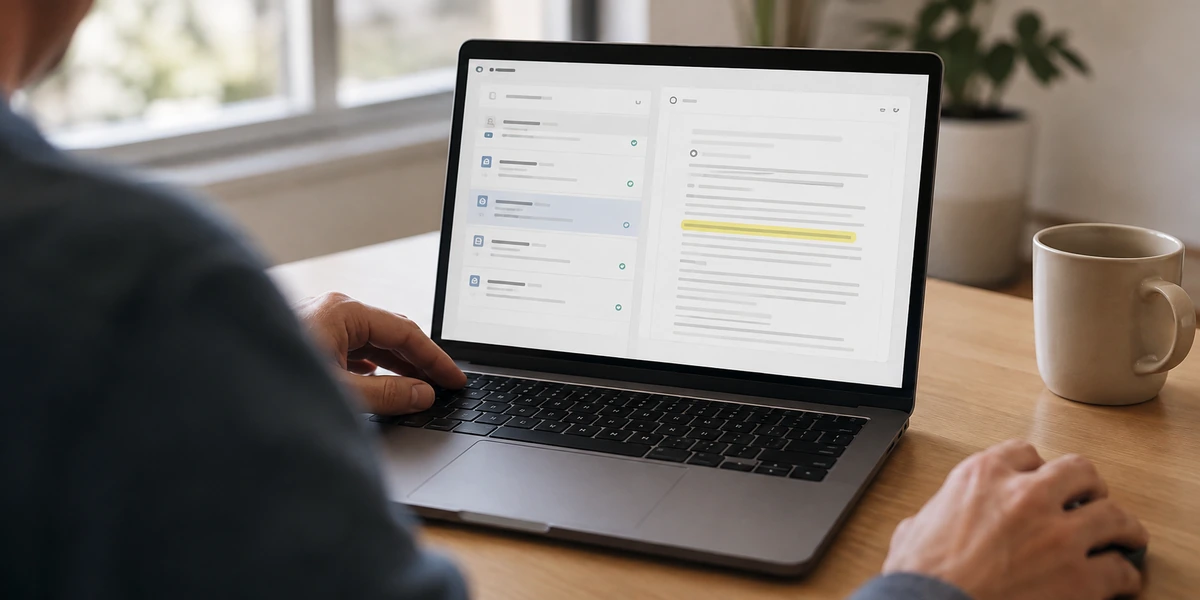
Four anchors, one verification path
A source-linked entry should connect the event date, facility, responsible provider, and source page without forcing the reader to reconstruct the encounter.
Step 1: Stabilize the Record Set and Citation System
The first step is to create one review set whose page references will remain stable through delivery. If files must be sorted, deduplicated, OCR-processed, or Bates-labeled, complete that work before the chronology is drafted whenever the project allows it.
Record each original filename and its location in the normalized review set. This crosswalk prevents a citation from shifting after files are combined or a supplement repeats earlier pages.
- Confirm the controlling page identifier: Bates number, PDF page, record page, or exhibit page.
- Retain a crosswalk when the client needs both Bates and PDF references.
- Mark duplicate productions without deleting a unique annotation, signature, or attachment.
- Assign supplemental records a version or production label so later entries remain traceable.
Step 2: Capture the Full Identity of the Encounter
The second step is to identify the encounter before summarizing its clinical content. At minimum, capture the date of service, facility, record type, provider name and credentials when shown, and the source-page range.
Dates need labels when the chart presents more than one. A service may occur on March 4, be dictated on March 5, and be signed on March 7. Lead with the event date and retain the other dates when they affect verification. A signature timestamp should not replace the treatment date.
CMS signature guidance offers a useful documentation principle: the author should be identifiable and authenticated by credentials. A litigation chronology serves a different purpose, but counsel still needs the distinction between author, signer, and responsible provider.
Step 3: Attribute the Event to the Correct Provider Role
The third step is to name the provider according to the role documented in the record. Facility, treating clinician, note author, signing clinician, ordering provider, interpreting physician, and referring provider may all be different people or entities.
Take an imaging sequence. An orthopedist orders an MRI, a facility performs it, a radiologist interprets it, and the orthopedist later discusses it. A precise chronology attributes each event separately. Combining them blurs who documented what.
- Use "authored by" or "signed by" when the distinction affects verification.
- Identify a supervising or cosigning clinician separately when the note shows both names.
- Use the facility name alone when no responsible clinician can be confirmed from the supplied record.
- For patient-reported history, state that the note documents the report. Do not present the statement as an independently established event.
Want to see how a chronology entry points back to the record?
Step 4: Separate Original Evidence From Repeated References
The fourth step is to cite the original report for a finding when that report is present, and to label a secondary reference when it is not. A later progress note that says "MRI showed disc protrusion" is evidence that the clinician documented that statement. It is not a substitute for the original MRI report if the report exists elsewhere in the production.
When both records are available, include the radiology impression on the study date and the treating provider's later discussion on its own date. If the report is missing, state that the note references an outside MRI and that the report was not located in the supplied set.
Step 5: Draft Only What the Cited Page Supports
The fifth step is to keep the entry no broader than the cited documentation. Symptoms, examination findings, diagnoses, recommendations, restrictions, and patient-reported history should retain the qualifiers used in the record.
Tidy prose can still distort the source. Keep "possible" when the note says "possible radiculopathy," separate an ordered referral from a completed consultation, and do not turn a copied problem list into a new event at every visit.
For a wider review of sourcing, chronology order, and neutral wording, see the medical chronology standards reviewers should follow. The same discipline applies at sentence level: each cited page must support the event as written.
Step 6: Attach a Consistent, Working Source Citation
The sixth step is to attach the citation in the same location and format for every material entry. Consistency lets defense counsel scan one column or one line for the source rather than learning a different citation pattern in each section.
Depending on the workflow, a citation may contain a Bates number, PDF page, exhibit, filename, and hyperlink. Use the shortest citation that reaches the exact supporting page. "Hospital Records, pp. 1–420" identifies a production, not a particular examination finding.
A source citation should shorten the path to verification, not rename the folder where the search begins.
Step 7: Cross-Check Duplicates, Conflicts, and Missing Reports
The seventh step is to compare related entries across providers and flag differences without deciding which version is correct. A chronology should show the documented conflict clearly enough for the attorney or retained expert to evaluate it.
If an emergency record lists June 12 and an intake form lists June 13, preserve both sources and flag the discrepancy. A later note repeating June 12 does not settle the conflict because the history may have been copied forward.
- Compare the date of service with dictation and signature dates.
- Check whether a repeated result comes from the original report or copied-forward text.
- Flag an outside study, consultation, or procedure that is referenced but absent.
- Keep amended and corrected notes connected to the version they modify.
- Record unresolved initials or illegible signatures as an attribution limitation.
Provider attribution also needs clinical context. A correct date can still be attached to the wrong stage of care, which is why our related discussion of why correct dates still need context matters when multiple notes describe the same episode.
Step 8: Run Human Quality Control and Test Every Link
The eighth step is a human review that tests provider identity, entry wording, source accuracy, and link behavior. Automated extraction and hyperlinking can reduce repetitive work, but the delivered chronology still needs a trained reviewer to confirm context and exceptions.
The quality reviewer should open the cited page and confirm the patient, event, provider role, qualifiers, and destination. A link that opens successfully can still be wrong.
- Verify names, credentials, facility labels, and dates against the source.
- Test every material page reference and hyperlink after the final PDF is assembled.
- Review conflicts, missing-record flags, and uncertain attribution for neutral wording.
- Confirm that supplemental records did not shift or break earlier citations.
- Check that the chronology organizes documented facts without stating causation, liability, credibility, or a medical opinion.
A Published Example of Why Source Access Matters
A published LezDo TechMed case study involving a plastic and reconstructive surgery expert witness shows the practical value. Prior summaries reportedly contained unsupported statements, missing clinical details, and hard-to-locate facts. LezDo TechMed provided standardized, hyperlinked chronologies using AI-assisted extraction followed by human medical review.
The expert remained responsible for the medical opinions. The chronology organized documented facts and made the source material easier to locate. The published case study reported a 60% reduction in report-preparation time for that engagement.
Questions Defense Teams Can Use Before Accepting Delivery
Defense teams can test a source-linked medical chronology by checking whether several representative entries lead to the correct provider and page. A polished format is helpful, but a short verification sample reveals far more about the underlying work.
- Does each material entry identify the facility and the responsible provider role?
- Can the reviewer distinguish a visit date from a report or signature date?
- Does the citation lead to the original report when it is available?
- Are copied-forward statements and secondary references labeled carefully?
- Are missing reports, uncertain authorship, and conflicting dates flagged without a conclusion?
- Do hyperlinks still work in the final delivered file?
- Can supplemental records be added without losing the earlier citation trail?
A Source-Linked Workflow in Three Numbers
4
Entry anchors
Date, facility, provider, and source reference
3
Quality-control layers
LezDo TechMed's published review process
60%
Less preparation time
Reported in the cited expert-witness case study
Frequently Asked Questions
What is a source-linked medical chronology entry?

A source-linked medical chronology entry summarizes a documented event and identifies the record page that supports it. It should also show the date, facility, provider role, and record type needed for verification.
Which provider should be named in a chronology entry?
Name the provider whose documented role matches the event. The treating clinician, note author, signer, ordering provider, and interpreting provider should be separated when the record assigns different roles.
Should a chronology cite Bates numbers or PDF page numbers?
Use the citation system that controls the client's record set. Bates numbers are stable across shared productions, while PDF page links can speed review; many defense teams request both.
Should the chronology cite an original diagnostic report?
Yes, cite the original diagnostic report when it is included in the supplied records. A later note that repeats the result may also be summarized, but it should not replace the available original source.
How should a chronology handle an unsigned or unclear note?
State the provider or facility information that can be confirmed and flag the attribution limitation. Do not infer authorship from surrounding pages when the record does not establish it.
What if two providers document different incident dates?
Preserve both documented dates with their respective sources and flag the conflict for attorney or expert review. A medical chronology should not decide which version is correct.
Can AI build source-linked chronology entries?
AI-assisted tools can support classification, extraction, and first-pass linking. Human reviewers should verify provider roles, qualifiers, page accuracy, and clinical context before delivery.
How are supplemental records added without breaking citations?
Label the supplemental production, maintain a file and page crosswalk, and retest earlier links after the final file is assembled. Version control keeps the original citation trail visible.
How LezDo TechMed Supports Source-Linked Medical Chronologies
LezDo TechMed builds medical chronologies that organize documented events by date and connect material entries to their supporting records. The workflow can include sorting and indexing, provider and record-type identification, missing-record flags, Bates or page references, hyperlinks, customized formats, and human quality control.
AI-assisted extraction may support document classification and first-pass data capture. Medical and paramedical reviewers check the clinical context, provider attribution, qualifiers, and source connection before delivery. LezDo TechMed organizes and flags the documented evidence. Defense counsel and retained experts decide how that evidence affects the matter.
For the broader defense use case, read why defense attorneys need medical chronologies in injury claims. It explains how source-linked timelines help counsel review prior history, treatment gaps, diagnostic findings, and conflicting documentation.
The Bottom Line
A source-linked chronology entry is built in layers: stabilize the file, identify the encounter, assign the correct provider role, find the original source, draft within the page's limits, attach the citation, check conflicts, and test the final link. Skip one layer and the chronology may remain readable while becoming harder to verify.
The goal is a clear path from summary to source. Defense attorneys should be able to open a material entry, see who documented it, reach the supporting page, and recognize any limitation without reconstructing the chart from the beginning.
Refer to our blog, "The Chronology Confidence Test: Can You Trace Every Key Date Back to the Record?" to learn how to evaluate source traceability after a medical chronology is delivered.
Source Credit : All metrics derived from LezDo TechMed’s internal project data.
Jebisha Jenishofen
Jebisha Jenishofen is a Certified Legal Nurse Consultant and Medical–Legal Research Analyst with over five years of experience in the medical-legal industry. She specializes in medical record analysis, medical-legal research, and content development, creating clear and informative resources on personal injury, medical malpractice, insurance claims, and healthcare litigation. By combining clinical knowledge with research expertise, she transforms complex medical information into practical insights for medical-legal professionals.













.png)