Home
>
Blog
>
>
How to Check a Narrative Summary Against Source Pages
- Check a narrative summary against source pages by sampling the sentences that carry risk (dates, turning points, negatives, attributions, and anything quoted in the brief), not the first page of prose.
- A cite passes only when it opens to the right document, the right date, and the right patient, and the page says what the sentence says.
- Log every check and send mismatches back to the writer with the page reference. Do not quietly rewrite the narrative yourself before mediation.
To check a narrative summary against source pages before mediation, pick the sentences that carry risk, open the page each one cites, and write down what the record actually says next to what the narrative says. Then send any mismatch back to the writer with the page reference. That is the whole method. The work is in choosing the right sentences and being strict about what counts as a match.
Mediation is where a narrative summary gets read by people who did not write it. A mediator skims it. Opposing counsel may quote from it. Someone across the table asks, "Where does it say that?" and the person holding the binder has to find the page. If the cite opens to a billing ledger, the argument stalls.
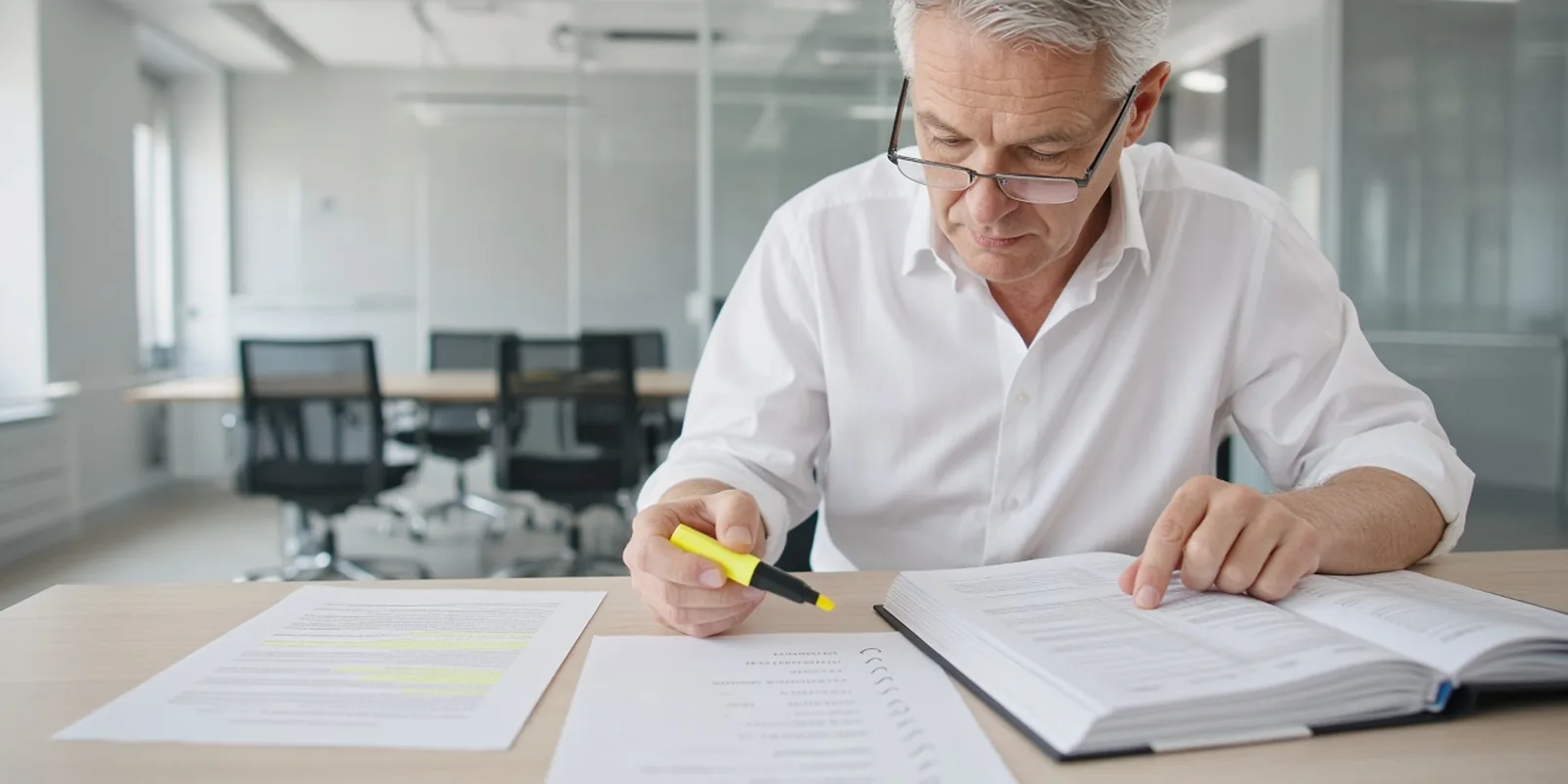
I review narratives the way I was trained to read charts: assume nothing, open the page. Here is how I would run that source check in the week before mediation, step by step.
Why check source pages if the narrative already has cites?
Cites on a page only prove that someone typed a reference. They do not prove the reference is right. A source check confirms that each cited page exists in your set, belongs to this patient, and supports the sentence as written.
In the records, cite errors tend to come from ordinary causes. A late batch of records arrives and the set is re-Bates numbered, but the narrative keeps the old numbers. Two facilities send PDFs with similar file names. A discharge summary repeats an earlier finding, and the writer cites the repeat instead of the original note. None of this means the writer was careless. It means the cite was never opened again after the file changed.
If you want the background on why traceable narratives matter in case prep, the post If You Can't Trace It, Don't Trust It covers it. This post is the hands-on part.
Start with the sentences that carry risk
Check the sentences that would hurt most if they were wrong. In a mediation narrative, those usually fall into five groups.
- Turning points. The first visit after the incident, a new imaging finding, a referral to a specialist, a procedure, a discharge from care.
- Dates and intervals. Any sentence that says how long something lasted or when it started.
- Negatives. "No prior history of neck complaints." "No treatment between June and September." A negative is a claim about the whole record, so it needs the most care.
- Attributions. Sentences that say a provider documented something, versus sentences that report what the patient said. "Patient reports numbness in the left hand" is a subjective complaint. "Exam documents decreased sensation in the left hand" is a provider finding. They are not interchangeable.
- Anything quoted in the mediation brief. If counsel lifted a sentence from the narrative into the brief, that sentence gets checked no matter what group it falls into.
Skip the routine middle on the first pass. Twelve identical physical therapy visits summarized as one phase rarely cause trouble. The sentence that says therapy "stopped due to improvement" might.
Check the sentences that carry risk
A cite passes only when it opens to the right patient, document, and date, and the page says what the sentence says.
What counts as a match when you open the page?
A sentence matches its source when four things line up: the right patient, the right document, the right date, and the same meaning. If any one of them is off, log it.
Here is the test I use on each sentence:
- Patient. Name, date of birth, or MRN on the page belong to this claimant. Similar names do turn up across facilities, so confirm a second identifier.
- Document. The cite opens to the note the sentence describes (an office note, an imaging report, an operative report), not a cover sheet, ledger, or fax header.
- Date. The date in the narrative matches the date of service on the page, not the date the record was printed or faxed.
- Meaning. The page says what the sentence says, at the same strength. "Imaging shows a disc herniation" is not the same as a report that says "findings may represent a small disc protrusion." Narratives sometimes round up clinical language. That rounding is exactly what a source check should catch.
That last point is where clinical literacy matters. Terms like protrusion, herniation, and bulge are not synonyms in a radiology report, and "rule out" in an assessment does not mean the condition was found. You do not need to interpret the finding. You only need to confirm the narrative repeats it faithfully.
Need a Narrative Summary That Matches Its Source Pages?
How do you check a negative statement?
A negative statement is checked by confirming the narrative names the boundaries of what was reviewed. "No prior history of neck complaints" should really read as "no prior neck complaints documented in the records reviewed," with the date range and facilities that were in the set.
To test a negative, look at the facility list. If the claimant's primary care records were never obtained, the narrative cannot say there was no prior history. It can say the returned records do not document one. That difference can change a mediation conversation, and it is one of the easiest fixes to request. The post on handling a pending records section shows how outstanding sources can be stated plainly instead of left out.
Open the pages before the mediator does.
Logging the source check
Keep a simple four-column log: the narrative sentence, the cite given, what the source page says, and a result (match, partial, no match, or no cite). A log turns a vague feeling about the narrative into a list the writer can fix.
Here is a scrubbed, generic process example (not a client matter). A paralegal checks eight sentences from a narrative going into a mediation binder. Five match. One cites a page that turns out to be a pharmacy printout rather than the orthopedic note. One says "MRI confirmed" where the report uses the word "suggestive." One negative ("no treatment for three months") holds up only because PT records from that clinic were never requested.
Three of eight is enough to stop. When problems cluster like that, widen the check to every turning point and every negative. The log goes back to the writer with page references attached, and the paralegal does not edit the narrative directly. If the person holding the binder rewrites sentences, the narrative and its cites drift apart again.
A Source-Page Check Before Mediation
5
Risk sentence types
Turning points, dates, negatives, attributions, brief quotes
4
Match tests
Patient, document, date, and meaning
4
Log columns
Sentence, cite, what the page says, and result
FAQs: checking a narrative summary against source pages
How do you check a narrative summary against source pages?

Pick the sentences that carry risk (turning points, dates, negatives, attributions, and anything quoted in the brief), open each cited page, and confirm the patient, document, date, and meaning match. Log the results and send mismatches back to the writer with page references.
How many sentences should you check before mediation?
Start with a sample of the highest-risk sentences. If several fail, check every turning point and every negative statement, because clustered errors usually mean the cites were not refreshed after the file changed.
What is the difference between a patient report and a provider finding in a narrative summary?
A patient report is what the claimant told the provider, such as a symptom or complaint. A provider finding is what the provider documented on exam, imaging, or testing. A reliable narrative keeps the two separate and attributes each one correctly.
Should a paralegal correct a narrative summary directly?
Usually not. Return a log with the sentence, the cite, and what the page shows so the writer can correct the narrative and its cites together. Direct edits by the reader tend to break the link between sentences and source pages.
What to send back to the writer
Send back the log, not a general complaint. Each line should name the sentence, the cite, and what the page shows, so the writer can correct it against the same set you checked.
Ask for three specific outcomes:
- Corrected cites for any sentence that pointed to the wrong page or the wrong patient.
- Revised wording where the narrative overstated or softened the source language.
- Negatives restated with the date range and facilities reviewed, and outstanding sources named.
Then re-check the corrected lines to close the loop. This is where a second set of trained eyes matters most: the writer knows the file, and the reader knows what the mediation will lean on.
A narrative summary organizes and flags what the records document. It does not decide causation or what a finding means for the case. Keep the check on the same footing. You are confirming fidelity to the page, nothing more.
If your team would rather receive a narrative that is built for this kind of check, LezDo TechMed medical narrative summary services tie each key event back to the source record, with missing-record identification available as an add-on. For the broader structure of a well-built narrative summary, the complete guide is a good reference. And if attribution is where your narratives slip most, the "who said it" problem is worth a read before your next mediation week.
Open the pages before the mediator does. The fixes are almost always small when you find them a week early.
Source Credit : All metrics derived from LezDo TechMed’s internal project data.
Jebisha Jenishofen
Jebisha Jenishofen is a Certified Legal Nurse Consultant and Medical–Legal Research Analyst with over five years of experience in the medical-legal industry. She specializes in medical record analysis, medical-legal research, and content development, creating clear and informative resources on personal injury, medical malpractice, insurance claims, and healthcare litigation. By combining clinical knowledge with research expertise, she transforms complex medical information into practical insights for medical-legal professionals.












.png)