Home
>
Blog
>
>
Medical Narrative Summary: A Complete Guide for Medico-Legal Teams
Key Takeaways
- A medical narrative summary presents clinically relevant records as a connected story.
- It differs from a medical chronology, which primarily lists events by date.
- It should distinguish patient-reported symptoms from provider findings.
- Every material fact should remain traceable to a page, Bates number or source document.
- The summary should explain treatment progression and documented response.
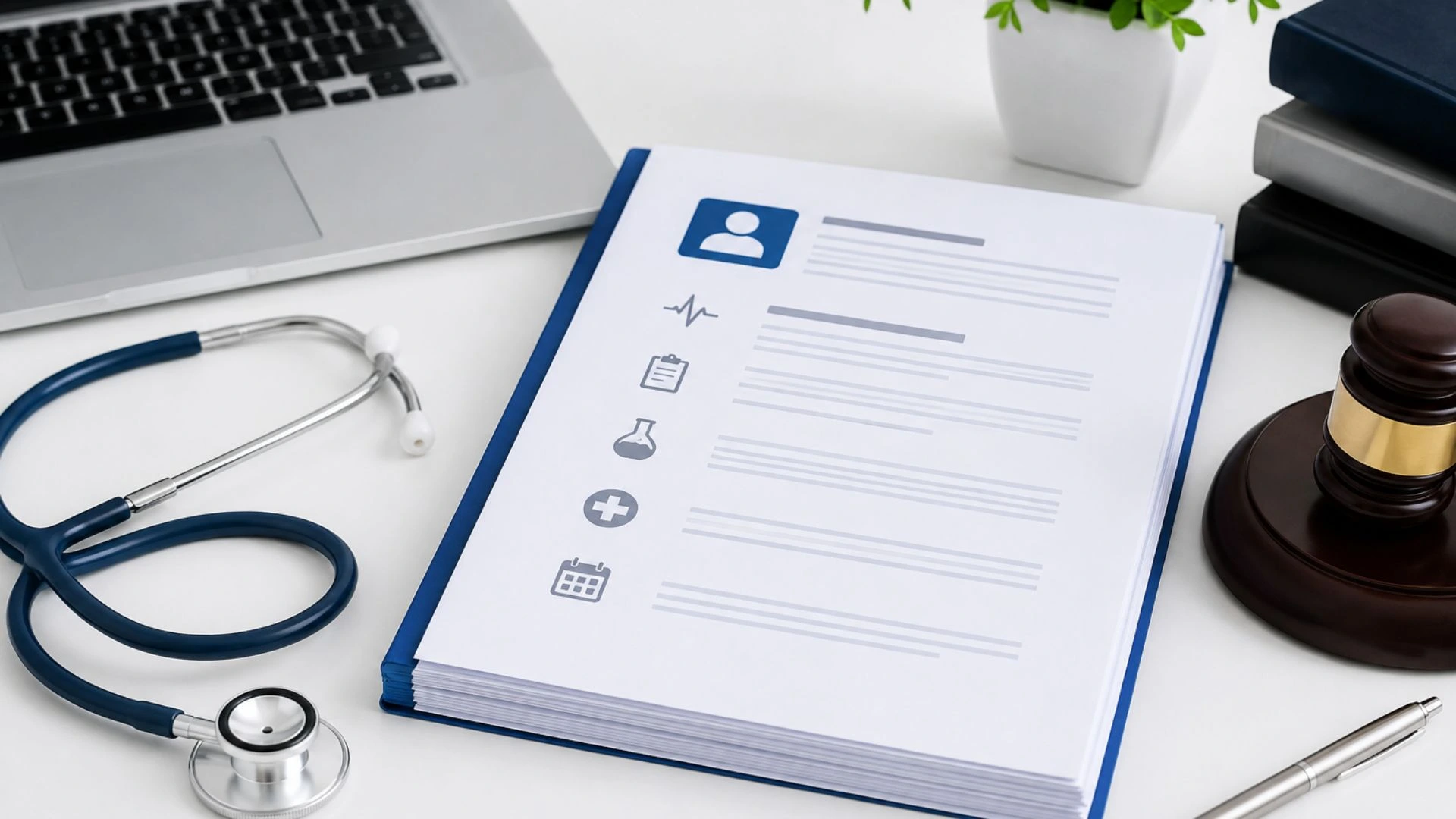
A medical narrative summary is a clear, chronological account of the clinically relevant information contained in a patient’s medical records. It connects relevant medical history, presenting complaints, diagnostic findings, treatment progression, functional changes and current documented status.
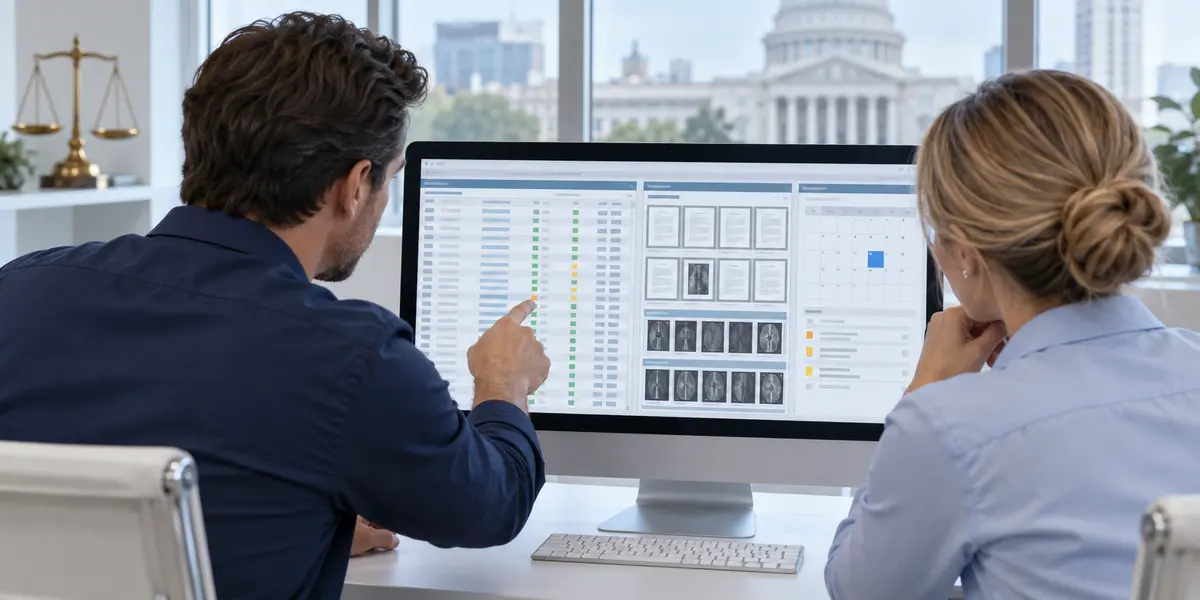
Attorneys, insurers, claims professionals, IME and QME physicians, life care planners, legal nurse consultants and medical experts use narrative summaries to understand complex records more efficiently. A well-prepared summary helps the reader locate important facts without repeatedly searching through the full record set.
A narrative summary supports professional review. It does not replace the underlying records or independently determine causation, negligence, impairment, disability, damages or future-care requirements.
What is a Medical Narrative Summary?
A medical narrative summary is a structured document that distills a patient’s medical history into a clear, chronological, and legally useful narrative. It converts complex medical data into plain language to help attorneys, claim professionals, IME/QME physicians, and life care planners.
Unlike a medical chronology, which presents events mainly as date-ordered entries, a narrative summary explains how the documented events relate to one another. It may be organized chronologically, by provider, by injury or by treatment phase, depending on the purpose of the review.
Who Uses Medical Narrative Summaries?
Medical narrative summaries are widely used across medical- legal, insurance, and life care plan industries. Professionals who rely on them include:
1. Attorneys and paralegals
Attorneys and paralegals may use summaries to understand the medical course, prepare demand materials, organize questions for depositions and identify records that require closer review.
2. Insurers and claims professionals
Claims professionals may use summaries to review treatment history, documented restrictions, medical expenses, gaps and provider opinions within the supplied records.
3. IME and QME physicians
IME and QME physicians may use a summary to navigate a large record set and locate relevant events. The evaluating physician remains responsible for reviewing the underlying records and forming an independent opinion.
4. Life care planners
Life care planners may use a summary to review injury progression, treatment response, functional documentation and recorded future-care recommendations before preparing a plan.
5. Medical experts and legal nurse consultants
Medical experts and legal nurse consultants may use summaries as an organized starting point for detailed case analysis, provided that material conclusions remain supported by the source records.
Purpose of a Medical Narrative Summary
Simplifies complex medical records
Medical records often come in various documentation formats from different healthcare providers. There may be duplicate pages, handwritten notes, abbreviations, and inconsistent medical terminology.
A narrative summary extracts vital medical data from these diversified records and presents them in a clear format.
This allows the medical, legal and insurance teams to focus on case strategy instead of spending their valuable billable hours sifting through records.
Connects medical events chronologically
Understanding the sequence of events is a major challenge in medical record review.
A narrative summary organizes medical events chronologically so readers can clearly follow:
- The date of injury
- Emergency treatment
- Physician visits
- Diagnostic testing
- Surgical procedures
- Rehabilitation progress
- Follow-up care
With this, professionals can easily identify treatment patterns, gaps in care, delays in treatment, and overall recovery progression.
Learn what happens when the narrative is build on gaps in our blog- narrative summary gaps.
Supports in decision-making
Medical narrative summaries support important case decisions such as:
- Determining claim value
- Evaluating injury severity
- Identifying causation
- Assessing future medical needs
- Reviewing treatment consistency
- Preparing for depositions and trial
- Negotiating settlements
Accurate medical narratives help professionals make informed decisions with greater confidence and efficiency.
60% Reduction in Record Review Time
Medical narrative summaries transform thousands of pages into structured, actionable insights—helping legal and insurance teams make faster, more accurate decisions.
Major Components of a Medical Narrative Summary
Patient demographics and case overview
This section provides the personal details of the patient and the basic case details, including:
- Age and gender
- Occupation
- Accident details
- Mechanism of injury
- Prior medical history
- Relevant pre-existing conditions
This gives a foundation to understand the case narrative.
Treatment timeline
The treatment timeline outlines the patient’s medical journey from the initial injury to the ongoing care.
The timelines usually include:
- Emergency room visits
- Hospital admissions
- Specialist consultations
- Physical therapy sessions
- Pain management treatment
- Surgeries
- Follow-up evaluations
A clear timeline helps readers quickly understand how treatment progressed over time.
Diagnostic findings and Physician observations
Diagnostic findings summarize important medical tests and objective evidence related to patient’s condition including:
- MRI results
- CT scans
- X-rays
- EMG studies
- Laboratory findings
Physician documentation often contains valuable clinical insights on:
- Pain complaints
- Functional limitations
- Range of motion deficits
- Neurological symptoms
- Treatment recommendations
A narrative summary extracts the most relevant objective diagnostic findings and physician observations to support the patient’s injuries and symptoms.
Documented Causation Information
A narrative summary may organize the facts and provider opinions relevant to causation, including the reported mechanism, onset of symptoms, diagnostic findings, prior history, treatment progression and opinions documented by qualified providers.
The summary should not independently decide whether the incident caused the condition. That determination belongs to the qualified medical and legal professionals reviewing the complete record.
Current Documented Status and Recorded Prognosis
The summary may report the latest documented symptoms, examination findings, treatment plan, work restrictions and prognosis recorded by providers. It should identify who made the statement and when.
A summarizer should not convert a provider’s conditional recommendation into a guaranteed future outcome. For example:
Preferred: “The treating physician recommended continued therapy and recorded a guarded prognosis.”
Avoid: “The patient will require lifelong therapy.”
Missing records and treatment gaps
Flag absent imaging, operative reports, therapy records, referrals, follow-up notes, incomplete date ranges, illegible pages, duplicate records and documents referenced but not supplied.
Fact–opinion boundaries
A narrative summary reports what the records document. It does not independently determine causation, negligence, standard-of-care deviation, impairment, disability, apportionment, damages or future-care requirements.
When a professional opinion appears in the records, attribute it directly:
Dr. Adams opined that the documented shoulder condition was related to the reported workplace incident.
Plain-language explanation
Define unfamiliar medical terms once, preserve the provider’s meaning and avoid loaded adjectives that are not supported by the record.
Quality control
Before delivery, check patient identity, dates, provider attribution, chronology, source references, medical terminology, missing events, unsupported interpretations, spelling, grammar and final-file navigation.
Types of Cases that Require Medical Narratives
Personal injury cases
Personal injury cases need to evaluate injuries, treatment progression, and damages to prepare demand letters, negotiate settlements, and get fair compensation.
Worker’s compensation claims
In worker’s compensation cases, narrative summaries help claims and legal professionals to understand work-related injuries, disability status, and return-to-work capabilities.
Medical malpractice litigation
Narrative summaries help medical malpractice legal teams in analyzing treatment decisions, identify deviations from standard of care and treatment complications.
IME/QME/CME evaluations
Physicians conducting IME, QME, and CME evaluations use narrative summaries to quickly review patient histories before medical evaluations. This improves case preparation efficiency, precision in medical opinions, and accurate reporting.
Insurance and disability claims
Insurance professionals use medical narrative reports to evaluate:
- Disability claims
- Long-term care claims
- Catastrophic injury claims
- Liability exposure
These summaries support faster and more informed claim decisions.
Mass tort and product liability cases
Narrative summaries help mass tort and product liability teams in reviewing huge volumes of medical records across multiple plaintiffs and identify common injury patterns and treatment histories.
Life care planning
Life care planners need to understand the claimant’s injury trajectory, the treatments undergone, ongoing care, and projected future care to provide accurate care plans.
See How Our Medical Narrative Report Samples Work
What Makes a High-Quality Medical Narrative Summary?
Clarity and readability
The narrative summary should be clear and easily intelligible to even the non-medical professionals. It should be devoid of medical jargon and confusion.
Medical accuracy
All diagnoses, treatments, and findings must be presented in line with medical records.
Chronological consistency
Medical events should follow a clear timeline without any confusion.
Case relevance
Information only relevant to the case should be presented in the summary. Including irrelevant details can distract the reader from the key issues.
Detailed but concise writing
Medical details should be simplified but not miss vital facts while ensuring readability.
Legal defensibility
Well-prepared summaries must support legal reviews and withstand scrutiny during litigation.
Deep dive into the key elements of narrative summary here.
Common Challenges in Medical Narrative Summaries
Missing or incomplete records
Building a medical narrative based on incomplete medical records, ignoring the missing documents, can affect its accuracy. The summary may not provide you with a comprehensive case narrative. Review teams need to identify the gaps before drafting the summary.
Illegible and handwritten notes
Some of the facilities and providers still create handwritten medical records. These records are difficult to interpret both by humans and AI tools. It requires special training or tools to retrieve accurate details from them.
Inconsistent medical terminology
Different physicians use different terms for the same condition. For example, a herniated disc can be noted as slipped disc, disc prolapse, disc bulge, or protruded disc. For non-medical professionals, they may give different meanings. Careful interpretation is required to maintain consistency.
Large volumes of medical data
Complex medico-legal cases involve thousands of pages of medical records. Organizing and reviewing the pile of records and locating critical facts necessitates experience.
Maintaining accuracy and objectivity
Medical narrative reports must be factual, objective, and medically accurate. The reviewer should avoid assumptions and unsupported conclusions during the summarization.
Know the narrative summary challenges in detail.
Step-by-Step Medical Narrative Summary Workflow
Gather and organize medical records
Collect medical records from all healthcare providers involved in the case. Sort and index them chronologically for proper medical record organization.
Review medical records
Record reviewers carefully scrutinize medical records to identify important medical details.
Identify key medical events
Most significant medical events such as hospital admissions, diagnostic findings, physician opinions, and surgeries are highlighted.
Create the medical summary
The reviewer drafts a clear and structured medical narrative explaining the patient’s medical journey in a plan language devoid of complex medical jargon.
Quality audit and accuracy checks
Final quality checks ensure:
- Medical accuracy
- Chronological consistency
- Clear formatting
- Complete documentation
Learn the complete narrative summary workflow in detail.
Best Practices for Effective Narrative Summary Workflows
Standardized documentation
Maintaining standardized documentation processes improves consistency and efficiency across cases. The readers can easily understand the patterns and documentation styles.
Complete HIPAA compliance
Organizations must ensure secure handling of medical records at every stage of narrative summary process to protect patient data confidentiality.
Secure technology platforms
Use highly secured modern review platforms to improve workflow management and support safe collaboration.
How AI Is Transforming Medical Narrative Summaries
- AI-assisted record review
Utilizing AI tools for records review helps firms process medical records faster. AI tools can identify keywords, organize documents, and extract vital information quickly.
- Faster document processing
AI-automated processes significantly reduce the time taken to sort and organize medical records. What once took many hours or days to complete can be now done in a few minutes. This reduces turnaround times for medical, legal, insurance, and life care plan teams.
- Improving workflow
AI can assist teams in handling repetitive administrative tasks easily and improve productivity. Teams can concentrate more on core tasks instead of toiling in redundant work.
Can Teams Rely Only on AI Narrative Summaries?
Blindly relying on AI-generated narrative summaries is not feasible.
AI alone cannot fully understand:
- Medical context
- Legal relevance
- Causation complexity
- Human judgment
- Nuanced physician opinions
Why Expert Oversight Matters in Narrative Summary Process?
- Contextual understanding: Only experienced reviewers understand how medical events connect within the broader medico-legal case.
- Legal relevance assessment: Human reviewers can identify crucial information that may directly impact the litigation strategy.
- Identifying red flags: Analyzing treatment gaps, inconsistent complaints, or conflicting diagnoses require human judgment.
- Ensuring accuracy and compliance: Only human reviewers can help maintain accuracy, confidentiality, and compliance with privacy requirements.
AI + Human: The Hybrid Model for 2026
Most of the medico-legal, insurance, and life care plan firms have understood the potential of combining AI technology with skilled medical record reviewers. This hybrid model is the future of medical narrative summaries.
This approach ensures:
- Speed, quality, and workflow automation
- Predictive analytics in identifying injury and treatment patterns, claim risks, and settlement trends
- Integrating legal and medical record review systems to improve collaboration and efficiency
"When thousands of pages hide critical facts, a strong medical narrative summary brings clarity, structure, and direction to every decision."
Should You Outsource Medical Narrative Summaries?
Many medical, legal, insurance, and life care plan firms outsource medical narrative summaries to specialized review providers.
Choosing experienced medical narrative summary providers helps maintain quality, accuracy, and timely delivery.
Outsourcing offers several advantages:
- Faster turnaround times
- Reduced internal workload
- Access to trained medical reviewers
- Improved scalability
- Cost efficiency
However, selecting the right provider is extremely important.
See why smart professionals rely on narrative summaries.
Parameters to Choose the Right Medical Narrative Summary Provider
Industry experience
Choose providers with wider experience in handling medico-legal, insurance, and life care plan workflows.
Turnaround time
Quicker delivery of narrative reports is essential to meet medico-legal deadlines. Look for a provider with shorter TAT while maintaining quality.
Accuracy standards
Providers who give priority for multi-tier quality audits can ensure accuracy and reliability in narrative summaries.
Data security measures
Choose the providers strictly adhering to HIPAA compliance and secure data handling measures.
Technology capability
Modern medico-legal and insurance workflows need to speed up processes. Seek firms which use secure platforms and AI-assisted review tools.
Here's a deeper breakdown of what to look for in a narrative summary provider.
The Role of Secure Technology Platforms Like CaseDrive
Secure technology can assist with record intake, file organization, access control, workflow tracking, reviewer collaboration and version management. It should support the review process rather than replace clinical judgment.
For sensitive medical records, organizations should evaluate encryption, user permissions, audit logs, data-retention practices, incident response procedures and contractual privacy obligations.
How LezDo TechMed Delivers Medical Narrative Summaries
Knowing what a high-quality narrative summary looks like is great but having a team consistently delivers is greater.
LezDo TechMed prepares customizable medical narrative summaries for legal, insurance, IME/QME and life care planning workflows.
The process may include:
- Secure record submission and scope confirmation.
- Record organization and duplicate handling.
- Extraction of relevant diagnoses, dates, findings and treatment events.
- Narrative drafting according to the agreed format.
- Identification of gaps, inconsistencies and pending records.
- Human review for attribution, chronology, terminology and source support.
- Final document and hyperlink-quality checks.
AI-assisted tools may help with extraction and organization. Trained reviewers remain responsible for checking context, accuracy and completeness. The final summary organizes documented information; qualified professionals make medical and legal determinations.
Whether you need a single summary or ongoing support across hundreds of cases, LezDo TechMed’s team is built to handle it.
Frequently Asked Questions (FAQs)
How long does it take to prepare a medical narrative summary?

The narrative summary preparation time depends on the size and complexity of medical records. Simple cases may take less time, while complex ones consume more.
Should every statement include a Bates reference?
Material findings, diagnoses, procedures, recommendations and opinions should be traceable to Bates numbers, page references or source documents whenever those references are available.
Who usually uses medical narratives?
Attorneys, insurance providers, claim adjusters, IME/QME/CME physicians, life care planners, and litigation support teams use these summaries to enhance their processes.
How does a narrative summary differ from medical chronology?
A narrative summary gives a comprehensive understanding of the case narrative to the teams, while the chronology presents the events in a sequential order.
Can AI create accurate narrative summaries on its own?
No. Ai can support in sorting, organizing, and extracting medical data, but only human review ensures accuracy, context, and legal relevance.
Why should medical narrative summaries be outsourced?
Outsourcing narrative summaries can save time, reduce internal workload, improve turnaround time, and gain access to the expertise of medico-legal professionals.
What makes a high-quality medical narrative summary?
An accurate medical narrative should be clear, accurate, sequential, concise, case-relevant, and legally defensible.
How LezDo TechMed’s medical narrative summaries differ?
LezDo TechMed combines AI-assisted processing with expert human review and uses the secure platform CaseDrive to deliver accurate, case-specific medical narrative reports to medical, legal, insurance, and life care plan professionals.
Bottom Line
In medical, legal, insurance, and life care plan workflows, even a single missed detail can cost a lot. Organizing the messy medical records and extracting vital details are inevitable to maintain a smooth workflow.
A well-built narrative summary puts every relevant fact where you can find it in a format you can actually use. This brings a difference in building your strategies on solid ground and building it on gaps you don’t even know exist.
With the right process, and right review partner, medical, legal, insurance, and life care plan professionals can save time, reduce workload, and make more confident decisions.
Need a source-referenced medical narrative summary?
LezDo TechMed prepares customizable, AI-assisted and human-reviewed medical narrative summaries for legal, insurance, IME/QME and life care planning workflows.
View medical narrative summary services or browse narrative summary samples.
Source Credit : All metrics derived from LezDo TechMed’s internal project data.
Anjana Devi Vijay
Anjana Devi Vijay is a Certified Legal Nurse Consultant (CLNC) and Medical–Legal Research Analyst with 9+ years of experience in medical record review, deposition summary analysis, and medico-legal research. She specializes in transforming complex healthcare documentation into accurate, actionable insights that support attorneys, insurers, and medical evaluators. With expertise in clinical documentation analysis and legal case support, she creates research-driven content focused on improving decision-making and case outcomes.












.png)