Home
>
Blog
>
>
5 Costly Mistakes PI Firms Make When Choosing Deposition Summary Providers
Here’s what quietly drives up the cost of deposition summaries for a PI firm:
- The rate is not the invoice – Rush surcharges, exhibit indexing and order minimums decide your bill as much as the per-page rate does.
- Wrong format, paid twice – Page-line, narrative and topic-based aren’t interchangeable. Buying the wrong one means paying to fix it.
- Cheap work reappears in-house – If your paralegal has to redo it, you paid the vendor and then paid your own team.
- Compare against your hours, not zero – Reading the transcript in-house isn’t free. It’s associate time on work clients won’t pay a premium for.
Read on for all five, plus a two-minute cost check you can run on your last transcript.
Choosing a deposition summary provider on per-page rate alone is how PI firms end up paying more, not less. Trying to work out whether outsourcing your deposition summaries actually saves money? You’re asking the right question, and the answer depends less on the rate than you would think.
On contingency, every dollar you spend is your dollar until the case resolves. That makes each summary a real decision, and it’s why the cheapest-looking option so often turns out to be the expensive one. Price is only one side of the decision; for the quality checklist, see how to choose a deposition summary provider that gets it right. Let’s go through the five mistakes I see most.
Mistake 1: Treating the per-page rate as the price
The rate is not the invoice. Ask what's excluded before you compare anything. Rush surcharges, exhibit indexing, transcripts over a certain length, revisions, minimum charges per order: any of these can quietly turn an attractive rate into a bill you didn't model. That is not a rate problem. It's a structure problem, and you can only see it if you ask what the rate doesn't cover.
Mistake 2: Buying the wrong format and paying to fix it
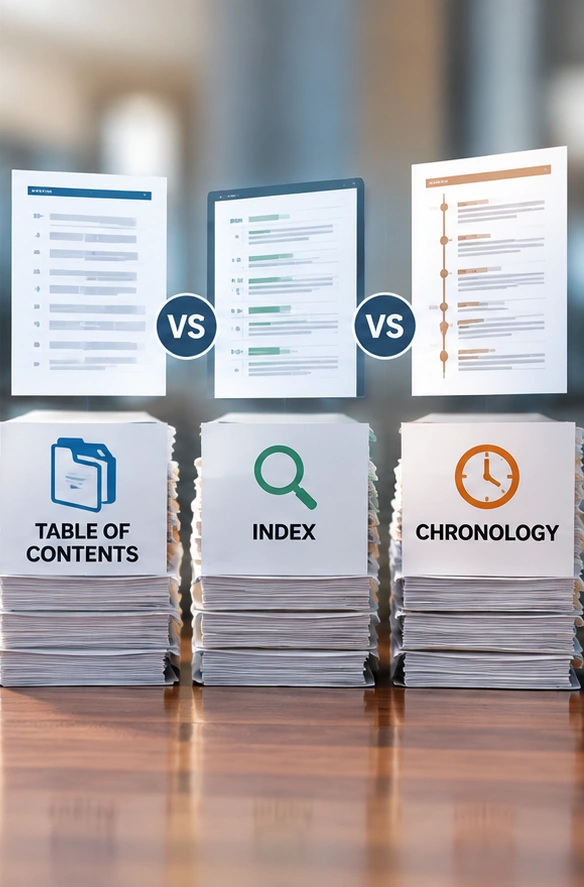
A deposition summary comes in formats: page-line, narrative, chronological, topic-based. They are not interchangeable, and buying the wrong one is expensive twice. If you need to quote testimony and cite it, a narrative summary reads beautifully and buries the page-lines you needed. If you want a readable account for a client or a mediator, a page-line summary is more granular than useful.
Decide what the summary is for before you order it, then look at the actual output. Our deposition summary samples show the page-line, narrative, chronological and topic-based formats side by side, which is a faster way to choose than reading a service description. Our deposition summary services page covers what each format is built for.
Want to see what a deposition summary actually costs?
Mistake 3: Buying cheap and paying twice
This is the one that stings, because the second payment never shows up on the vendor invoice. It shows up as your paralegal spending six hours fixing a summary, or an associate re-reading the transcript because nobody trusted the output. You paid the vendor, then paid your own team to redo the work. The cheap summary became the most expensive line item in the case, and nothing in your accounting will tell you that.
The test isn’t the rate. It’s whether anyone in your office has to touch it again after it lands.
Mistake 4: Not sizing the cost before the transcript arrives
Unpredictable cost is its own problem, separate from high cost. If you can’t estimate the spend before committing, every deposition becomes a fresh judgment call, and judgment calls under time pressure default to “we’ll just read it ourselves.” Fixed per-page pricing and an estimate up front turn the decision into arithmetic. You want to know the number before you say yes, especially while you’re funding the case.
The cheapest deposition summary is the one your team has to redo, and that cost never shows up on the invoice.
Mistake 5: Comparing the vendor’s cost to zero
Here’s the one that changes the math. Firms compare a summary’s cost against not buying it, as if reading the transcript in-house is free. It isn’t. It’s an associate’s hours, at an associate’s cost, on work no client is going to pay a premium for. A 300-page transcript doesn’t read itself in an hour. For PI teams carrying this across a caseload, our personal injury litigation support work exists precisely because those hours add up faster than firms expect.
The right comparison is vendor cost against the fully loaded cost of your own team doing it, plus what those hours would have produced instead. One California IME firm reported cutting deposition analysis time by about 44% during its engagement. The hours saved matter less than what those hours went into instead.
A gut-check you can run this week: take your last deposition transcript. Ask whoever summarized it how long it took, honestly. Multiply by their cost per hour. Compare that number to a per-page quote for the same transcript. Whatever the answer is, at least you’ll be comparing the right two numbers.
What to check before you sign
$7,000+
Monthly hidden fees
What one San Diego QME practice reported losing before moving to fixed per-page pricing.
48 hours
Standard turnaround
For review deliverables once scope is confirmed, depending on volume and condition.
Per page
Fixed pricing
So you can size the cost before the transcript lands.
Frequently asked questions
How much does a deposition summary cost?

Cost depends on transcript length, format and turnaround. LezDo TechMed uses fixed per-page pricing so the spend can be estimated before you commit. The more useful comparison is the per-page cost against the fully loaded cost of your own team reading the transcript.
Is it cheaper to summarize depositions in-house?
Often not, once the hours are counted honestly. In-house reading costs associate or paralegal time on work clients rarely pay a premium for. The comparison should be vendor cost against your team's fully loaded hours, rather than against zero.
What should PI firms ask about deposition summary pricing?
Ask what the per-page rate excludes: rush surcharges, exhibit indexing, long-transcript charges, revisions and order minimums. Ask for an estimate before the work starts. The rate alone rarely equals the invoice.
Which deposition summary format is most cost-effective?
The one that matches the job. A page-line summary suits testimony you need to quote and cite; a narrative suits a readable account for a client or mediator. Buying the wrong format means paying again to fix it, so decide the purpose before ordering.
Why do cheap deposition summaries end up costing more?
Because the second cost lands on your own team. If a paralegal spends hours fixing the output or an associate re-reads the transcript, you paid the vendor and then paid again internally. That rework never appears on the vendor invoice.
Can I estimate deposition summary cost before the transcript arrives?
Yes, when the provider uses fixed per-page pricing. Once you know the approximate page count, the cost is arithmetic. Unpredictable pricing is its own problem, because it pushes firms into defaulting to in-house reading.
Bringing it back to your case costs
Choosing a deposition summary provider is not really a rate comparison. Ask what the rate excludes. Match the format to the job before you order. Notice when cheap work costs you twice. Get an estimate before you commit. And compare the spend against your own team’s hours rather than against zero. Do those five things and the decision stops being a gut call and starts being arithmetic.
You’re funding these cases yourself. You should know what each deposition costs you before the transcript lands, not after. Ready to see the numbers? Partner with LezDo TechMed, or check the pricing and compare it against what your last transcript really cost you.
Source Credit : All metrics derived from LezDo TechMed’s internal project data.
Anjana Devi Vijay
Anjana Devi Vijay is a Certified Legal Nurse Consultant (CLNC) and Medical–Legal Research Analyst with 9+ years of experience in medical record review, deposition summary analysis, and medico-legal research. She specializes in transforming complex healthcare documentation into accurate, actionable insights that support attorneys, insurers, and medical evaluators. With expertise in clinical documentation analysis and legal case support, she creates research-driven content focused on improving decision-making and case outcomes.












.png)


