Home
>
Blog
>
>
How a Deposition Summary Surfaces Impeachment Material Defense Attorneys Can Actually Use
Here's how a deposition summary sets up impeachment for a defense attorney:
- Page-line on every point – Each flagged statement traces to its exact transcript page and line, so your cite holds on the record.
- Exact words preserved – The deponent's own language stays intact where it matters, not paraphrased into a smooth narrative.
- Testimony mapped to records – Contradictions between what the witness said and what the records document are flagged and sourced.
- You decide, the summary surfaces – The summary flags documented inconsistencies; the credibility and strategy calls stay yours.
Read on for what makes a summary impeachment-ready, plus a gut-check before your next cross.
A page-line deposition summary surfaces impeachment material by pinning every key statement to its exact page and line, then cross-referencing that testimony against the medical records. Staring at a 300-page transcript with cross a week out and no clear idea where the contradictions sit? You don't have to be.
A deposition summary is a condensed, indexed version of a deposition transcript. A good one does more than shorten the testimony. It preserves the deponent's exact words where they matter, tags each point to its page and line, and flags where the testimony does not line up with what the records document. For a defense attorney building toward impeachment, that mapping is the whole value.
Why impeachment material is so easy to miss
The contradiction you need is rarely on the page you expect. A deponent describes the accident one way on page 40 and slightly differently on page 214, or claims no prior back pain while the records show three years of it. Read a transcript straight through and those two points sit 170 pages apart, easy to lose. The job of an impeachment-ready summary is to bring them next to each other, sourced, so you see the gap instead of hunting for it.
Faster review does not have to mean a thinner one
One California IME firm reported cutting its deposition analysis time by around 44% during its engagement, without giving up the page-line detail its attorneys relied on. That speed came from a structured process, not from skimming, which is the only kind of speed worth having when a single contradiction can turn a case.
What makes a deposition summary impeachment-ready
Not every summary sets up a cross. A narrative that smooths the testimony into readable prose can quietly bury the exact wording you needed to quote. For impeachment, a few things are non-negotiable.
First, page-line citations on every flagged statement, so you can put the deponent's own words on the record without being corrected on the cite. Second, the exact language preserved where it counts, not paraphrased. Third, a testimony-to-records cross-reference that shows where the deponent's account and the documented treatment diverge. You can see how a page-line format traces every line back to the transcript in these deposition summary samples.
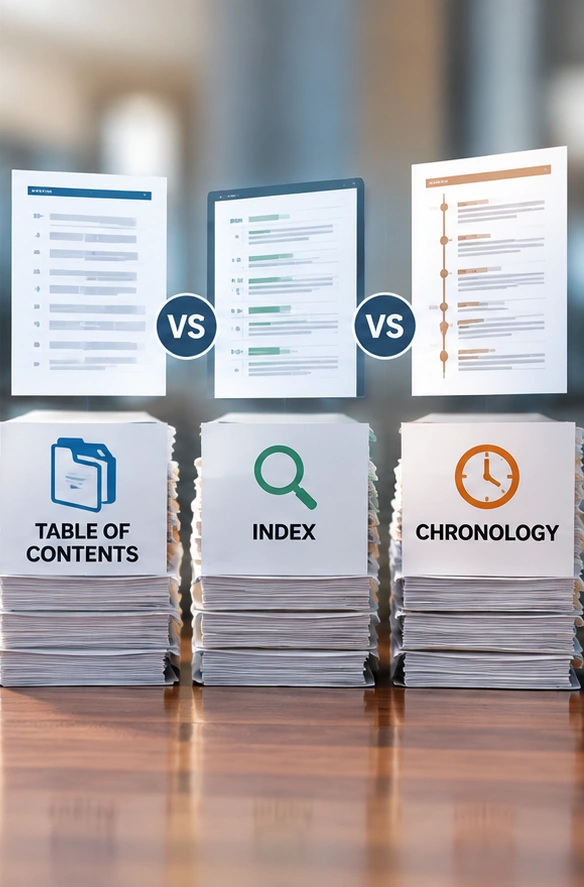
The format you pick shapes what you get. A page-line or topic-based summary is built for fact-oriented, impeachment-driven work; a pure narrative reads well but hides the seams. Our deposition summary services offer both, so the deliverable matches how you plan to use it.
Prepping cross on a stack of transcripts?
The real work is mapping testimony against the records
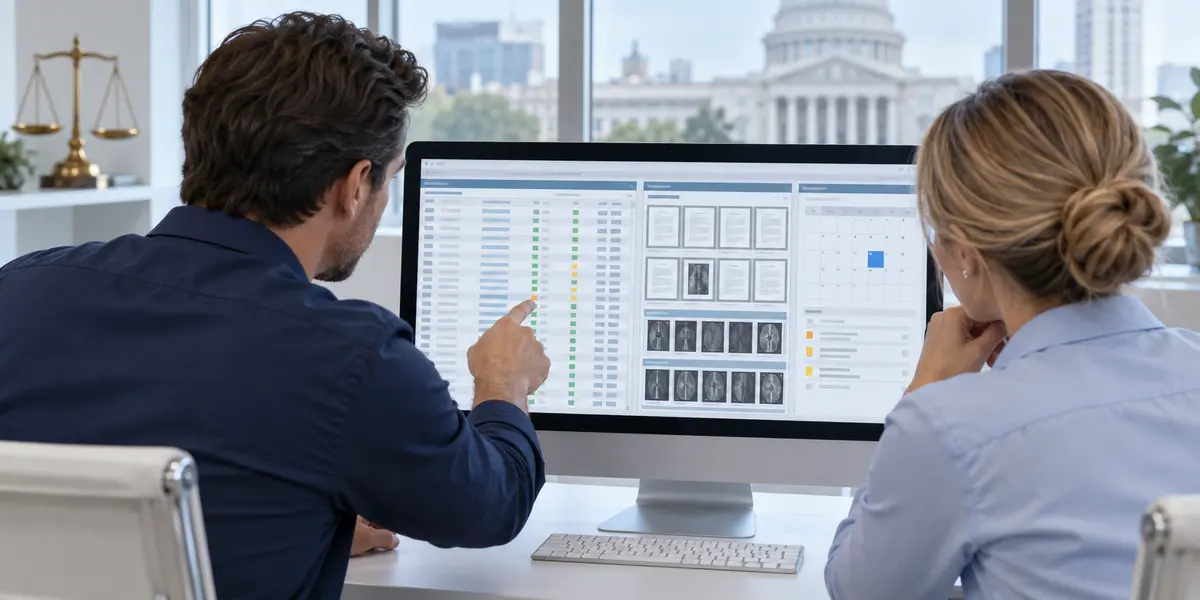
Impeachment often lives in the gap between what the deponent said and what the medical records show. A claimant testifies the injury left them unable to work; the records note a return-to-work release two months in. A deponent denies prior treatment; the chart says otherwise. Surfacing those gaps means reading the transcript and the records together, not in separate passes.
Here is the boundary worth stating plainly. A deposition summary flags documented inconsistencies between the testimony and the records and cites both. It does not decide who is telling the truth, whether a witness is credible, or how the case should come out. Those calls are yours. The summary's job is to hand you the sourced contradictions so you can make them. For the longer view, see how deposition summaries support medical-legal cases.
Impeachment lives in the gap between what the witness said and what the records show.
Where AI helps, and where a human still has to read
AI-assisted review earns its place on long transcripts. It indexes testimony, tags page-lines and builds a first-pass summary far faster than a person working alone. But catching a contradiction is a judgment call. Whether a statement on page 214 actually conflicts with a treatment note takes a reviewer who understands both the testimony and the clinical record. At LezDo TechMed, AI handles the indexing and the first pass, and a trained reviewer checks the context and the cross-references. The speed is the machine's; the catch is the human's.
A quick gut-check before your next cross: could you name, right now, the three places this deponent's testimony conflicts with the records, with page-lines? If you can, the summary did its job. If you cannot, that is the gap to close before you are standing at the podium.
What an impeachment-ready summary gives you
44%
Faster deposition analysis
Reported by a California IME firm during its engagement.
Page-line
Every flagged statement
Traceable back to the exact transcript page and line.
3-layer
Quality control
Testimony and cross-references checked before the summary reaches you.
Frequently asked questions
What is a deposition summary?

A deposition summary is a condensed, indexed version of a deposition transcript. A strong one preserves the deponent's exact words where they matter, cites each point to its page and line, and flags where the testimony does not match the documented records.
How does a deposition summary help with impeachment?
It surfaces contradictions by pinning each key statement to its page-line and cross-referencing the testimony against the medical records, so inconsistencies are indexed and sourced before cross-examination. The attorney decides how to use them.
Which deposition summary format is best for impeachment?
A page-line or topic-based summary suits impeachment-driven, fact-oriented work because every statement traces back to the transcript. A pure narrative reads smoothly but can bury the exact wording and page-lines you need to quote.
Does a deposition summary decide whether a witness is credible?
No. A deposition summary flags and cites documented inconsistencies between testimony and the records. It does not judge credibility, truthfulness or liability. Those determinations belong to the attorney and the court.
Can AI write a reliable deposition summary?
AI can index testimony and build a fast first pass, but a trained reviewer still has to confirm that a flagged statement genuinely conflicts with the records and that the page-line cites are correct. The human step is what makes the contradictions dependable.
How long does a deposition summary take?
Turnaround depends on transcript length, exhibit volume and scope. A structured review process is what lets a long transcript be summarized quickly without losing the page-line detail impeachment depends on.
Bringing it back to cross
An impeachment-ready deposition summary does one thing that matters: it puts the contradictions in front of you, sourced to the page-line and mapped against the records, before you need them. Exact wording preserved. Testimony and records read together. A format that fits how you will use it. Get that, and you walk into cross knowing where the gaps are instead of hoping to find them.
You do the impeaching. The summary just makes sure nothing that could help you is still buried on page 261. Ready to prep cross from a summary built for it? Partner with LezDo TechMed, or estimate what your next deposition summary would cost.
Source Credit : All metrics derived from LezDo TechMed’s internal project data.
Anjana Devi Vijay
Anjana Devi Vijay is a Certified Legal Nurse Consultant (CLNC) and Medical–Legal Research Analyst with 9+ years of experience in medical record review, deposition summary analysis, and medico-legal research. She specializes in transforming complex healthcare documentation into accurate, actionable insights that support attorneys, insurers, and medical evaluators. With expertise in clinical documentation analysis and legal case support, she creates research-driven content focused on improving decision-making and case outcomes.










.png)


