Home
>
Blog
>
>
How AI-Powered Narrative Summaries Save Hours in Case Prep
AI turns overwhelming medical records into a clear, structured narrative—giving IMEs more time for expertise and less time for paperwork.
AI-powered narrative summaries help independent medical examiners organize large volumes of medical records into clear, structured summaries. The technology can identify key diagnoses, treatments, procedures, test results, and timelines, reducing the time spent searching through individual documents.
For IMEs and QMEs, these summaries can provide an organized starting point for reviewing medical history. However, human review remains important for checking accuracy, context, and clinical relevance before an examiner forms an independent medical opinion.
This guide explains how AI-powered narrative summaries work, how they can support IME case preparation, and what to consider when choosing an AI summarization solution.
Save 70–80% Review Time
AI-powered narrative summaries cut manual record review time, allowing IMEs to handle more cases without compromising quality.
What are AI-Powered Narrative Summaries?
An AI-powered narrative summary is a concise, structured overview of a patient’s medical history generated using artificial intelligence algorithms in a narrative format. These AI systems analyze the medical information needed for a case and extract key points such as diagnoses, treatments, medications, surgeries, and timelines.
AI can process and organize large volumes of medical information more quickly than a fully manual workflow, depending on record volume and document quality. For IMEs, this means that the foundational information is already organized, allowing them to concentrate on understanding the medical facts rather than searching for them.
How AI Simplifies the Case Preparation Process
AI tools designed for medical record review for IMEs use natural language processing (NLP) and machine learning (ML) to read and understand medical documents. Here’s how they streamline the IME workflow:
1. Automatic Data Extraction
AI systems can automatically identify and extract key medical information, such as
- Patient demographics
- Diagnoses
- Procedures and surgeries
- Medications prescribed
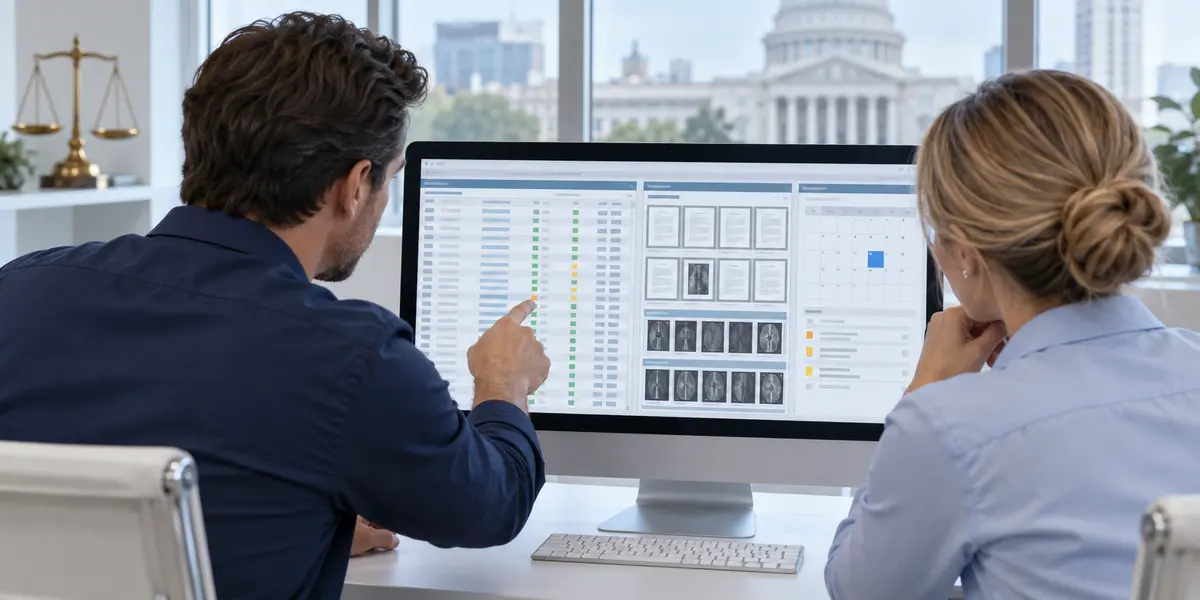
- Test results and imaging findings
- Physician assessments and follow-ups
This automation removes the need to manually highlight or retype key information, which typically takes hours.
2. Chronological Case Summaries
AI organizes extracted data into an easy-to-read timeline, showing the sequence of events from injury to treatment and follow-up. IMEs can quickly grasp how the condition evolved, without flipping through dozens of documents.
3. Elimination of Redundancy
AI identifies and filters out duplicate or irrelevant information, leaving only unique, case-specific data. This makes summaries concise and prevents confusion caused by repetitive records.
4. Keyword Search and Filtering
AI tools allow IMEs to search specific terms or symptoms across all records instantly. For example, if an examiner needs to find every mention of “back pain” or “MRI of lumbar spine,” the AI system retrieves it immediately, but it might take hours manually.
5. Visual Dashboards
Some advanced AI tools generate visual summaries such as charts or timelines, helping IMEs quickly understand patterns like symptom progression or treatment gaps.
Benefits of AI-Powered Narrative Summaries for IMEs
1. Saves Hours of Manual Work
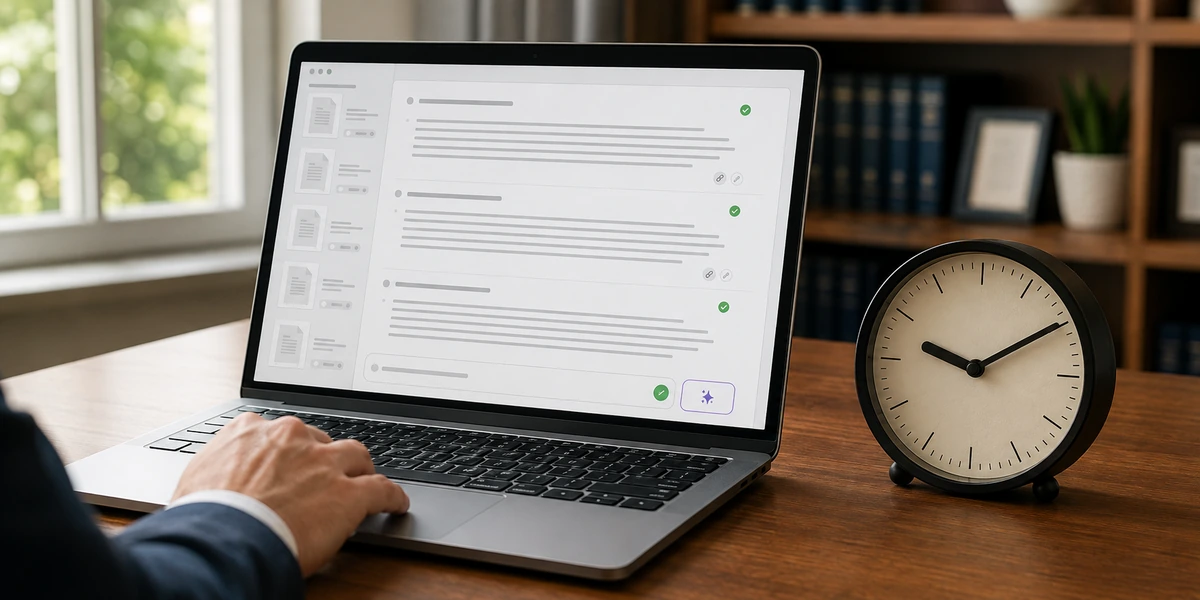
One of the greatest advantages of AI summarization is time savings. Without AI, IMEs or their staff manually do the mechanical task of reviewing records, which may take hours. AI can review the same files within an hour. This efficiency allows IMEs to handle more cases without reducing quality.
Law firms, insurance companies, and third-party administrators appreciate timely reports. AI tools help IMEs deliver results faster, improving client satisfaction and professional reputation.
Need High Quality Medical Narrative Summary?
2. Supports Focus and Quality Control
When AI handles repetitive extraction and organization, IMEs can spend more time reviewing medical findings and applying their professional judgment. Human verification remains important because AI-generated summaries may contain errors or miss information.
3. Reduces Burnout and Fatigue
When reviewing voluminous records, anyone can feel exhausted. They may need a break, but taking one could cause them to miss the deadline. Heavy documentation load and poor time for creating records double the risk of burnout among IMEs. Automating this process reduces burnout and fatigue, allowing IMEs to dedicate their mental energy to high-value tasks that require professional judgment.
4. Supports Clearer Report Preparation
Structured summaries can help organize medical events, timelines, and findings in a consistent format, giving IMEs a clearer starting point for report preparation.
Research reported by Stanford HAI shows that adapted large-language models can produce clinical summaries that are competitive with human summaries.
5. Consistent formatting
Physician notes are often inconsistent with abbreviations, jargon, slang, or grammatical mistakes. AI-generated summaries maintain consistency in structure and terminology, which is especially helpful for large IME practices that handle multiple cases simultaneously.
A 2024–2025 proof-of-concept study looked at 1,618 clinical notes and used a large language model (AI) to make them more consistent. The study found that AI can make messy clinical notes easier to read and more consistent, without losing medical details.
AI Narrative Summaries for IMEs and QMEs
AI narrative summaries can help IMEs and QMEs organize medical records before reviewing a case. The summary can highlight diagnoses, treatment history, procedures, test results, and key dates, while allowing the examiner to return to the source records when additional context is needed.
AI should support the examiner's workflow rather than replace independent medical judgment. The final medical opinion should remain based on the examiner's professional assessment of the complete record and case information.
Selecting the Right AI Tool for IME Needs
When choosing an AI summarization platform, IMEs should look for the following features:
- Medical-grade NLP engine trained on healthcare data
- HIPAA compliance to protect patient confidentiality
- Customizable templates for different case types (personal injury, disability, workers’ comp, etc.)
- Integration options with existing systems or EMRs
- Human reviewer’s verification and notes
- Source traceability
While AI medical narrative summary tools are highly efficient, human reviewers must still review the generated summaries to ensure medical accuracy. AI-powered narrative summaries can sometimes misinterpret poorly scanned documents. Therefore, human oversight remains essential.
LezDo TechMed integrates advanced AI technologies with human reviews to deliver high-quality narrative summaries for IMEs. This hybrid approach ensures that the summaries are medically accurate, confidential and delivered more quickly.
Why IMEs Need AI-Powered Narrative Summaries
4×
Faster Case Prep
AI pulls and structures key data four times quicker
60%
Higher Consistency
AI delivers cleaner and standardized summaries
50%
Less Cognitive Load
Automation reduces mental fatigue
Frequently Asked Questions
What is an AI medical narrative summary?

An AI medical narrative summary uses artificial intelligence to organize key medical information, diagnoses, treatments, and timelines into a structured narrative for review.
Can AI summarize medical records for an IME?
Yes. AI can help organize and summarize medical records for IME preparation, while the examiner reviews the source records and applies independent medical judgment.
How much time can AI-powered summaries save IMEs?
AI-powered narrative summaries can reduce medical record review time by 70–80%, significantly speeding up case preparation and report turnaround.
Are AI-generated narrative summaries accurate?
Yes, when combined with human medical reviewer oversight. AI handles extraction and structuring, while medical professionals validate accuracy, context, and clinical relevance.
What is the difference between an AI medical record summary and a narrative summary?
An AI medical record summary organizes key medical information, while a narrative summary presents those findings in a structured account of the patient's medical history and events.
How do AI summaries help maintain IME objectivity?
AI processes all data uniformly without bias, giving IMEs a neutral, structured foundation. IMEs then apply their independent medical judgment to form unbiased opinions.
Are AI-powered narrative summaries HIPAA-compliant?
Reputable providers use HIPAA-compliant systems, encrypted data handling, and secure workflows to protect patient confidentiality and sensitive health information.
Can AI summaries be customized for different IME case types?
Yes. AI tools can generate customized summaries for personal injury, workers’ compensation, disability, and impairment evaluations, based on case-specific templates.
Do AI summaries improve report quality for IMEs?
Yes. AI ensures consistent formatting, clear timelines, and complete medical event coverage, resulting in clearer, more defensible IME reports.
How do AI summaries reduce IME burnout?
By eliminating repetitive, time-intensive record review tasks, AI reduces mental fatigue and allows IMEs to focus on higher-value clinical analysis and expert opinions.
To sum up,
AI-powered narrative summaries can help IMEs and QMEs organize large medical record sets, locate relevant information, and prepare for case review more efficiently. They can reduce repetitive manual work while giving examiners a structured view of the medical history.
However, AI should support rather than replace professional judgment. Human verification, source traceability, data security, and review of the underlying medical records remain important when using AI-generated summaries for IME and QME preparation.
Source Credit : All metrics derived from LezDo TechMed’s internal project data.
Jebisha Jenishofen
Jebisha Jenishofen is a Certified Legal Nurse Consultant and Medical–Legal Research Analyst with over five years of experience in the medical-legal industry. She specializes in medical record analysis, medical-legal research, and content development, creating clear and informative resources on personal injury, medical malpractice, insurance claims, and healthcare litigation. By combining clinical knowledge with research expertise, she transforms complex medical information into practical insights for medical-legal professionals.










.png)


