


What if your content could do the client‑picking for you? When you share the right kind of guidance, the people who value your work naturally drift in your direction. In this blog, you’ll see simple ideas that make you stand out without trying harder.

How to Attract Ideal Clients with Educational Content: Tips for QMEs
“Discover practical ways to explain your process, apportionment, and rating steps so clients instantly trust your expertise.”
10:9 Client Fit Improvement
When your explanations match what clients look for, more of the referrals you get will actually feel like the “right” ones.
Start by Noticing the Patterns in the Clients You Prefer
Before creating any educational content, figure out which clients you want more of.
Don’t overthink this. Just observe:
- Who sends complete records?
- Who doesn’t argue over every small detail?
- Who trusts you to do your job?
- Who communicates clearly and on time?
When you write content, speak about the problems they deal with. Your content becomes more powerful when it feels like, “This QME actually gets what we deal with every day.” When the right people feel seen, they naturally prefer you over other evaluators.
Show the Full Path of a Case
Most clients have no idea how many steps you take to reach a solid conclusion. Break your process into clear stages and explain what happens before, during, and after the exam.
Clients don’t realize how record gaps, late imaging, or unclear “issues for determination” can slow everything down. Your content should help them see how their actions either speed up or delay the case.
You can create a simple map of your workflow:
- Panel received
- Scheduling
- Records review
- Exam planning
- Examination
- Causation analysis
- Apportionment
- Rating math
- Report creation
- Addendum steps
Explain, in simple terms, what helps during each stage. For example: “If you send a complete and indexed packet upfront, it removes two to three days of back‑and‑forth.”
When clients understand your process clearly, they send better materials and respect your timelines. They become easier to work with and more likely to stick with you as their preferred evaluator.
Want a quick look at what actually works?
Teach Your Apportionment Method
Start by explaining what you look at: history, imaging, prior conditions, job duties, and exam findings. Explain the idea of weighing causes instead of guessing. Show how you connect each percentage to real evidence.
Your educational content could include examples like:
- How you separate wear‑and‑tear degeneration from a workplace event
- How timelines and function changes influence your decision
- How new imaging can change apportionment?
When referrers see your logic explained openly, they know your decisions are consistent and fair. This is the type of transparency that leads attorneys to return repeatedly because they can predict how you think.
Explain Your Rating Math
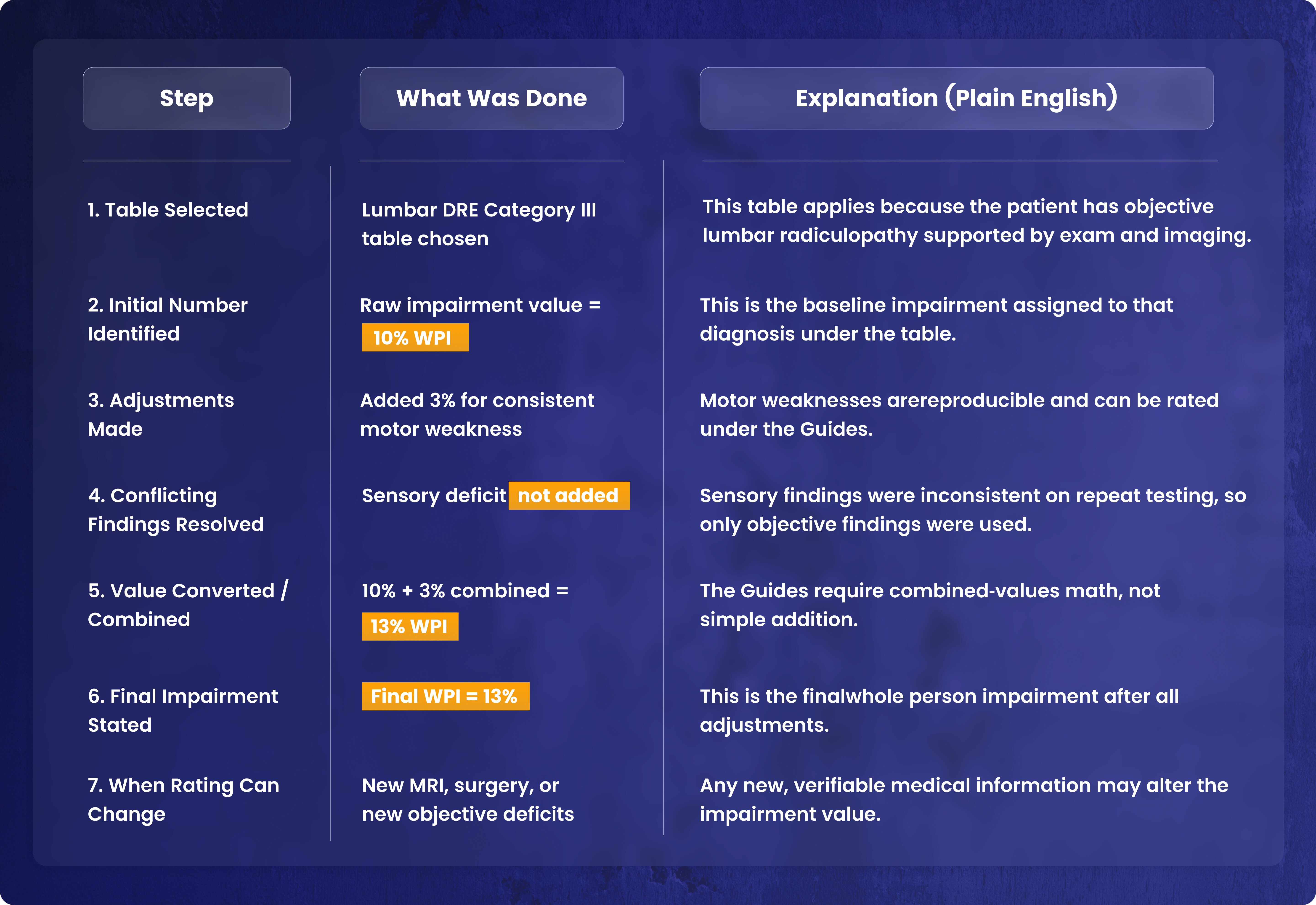
Many attorneys don’t fully understand AMA Guides math. Some only look at the final number. So, briefly cover why you chose a certain table, what the initial (raw) impairment number represents, how you converted values, how you resolved contradictions in the findings, and when new medical information can change the rating.
Here is a simple example showing how a QME moves from the selected table to the final impairment number.
Simple Templates You Can Offer
- Record Index Template
- Missing‑Documents Checklist
- Issues/Questions for Determination Sheet
- Standardized Addendum Request Form
- Pre‑Exam Information Checklist
When your templates save clients time and prevent mistakes, they immediately see the value of working with you. Clean submissions mean less back‑and‑forth, fewer delays, and more accurate opinions. As you become the QME who makes their work easier, clients naturally choose to send you more cases.
“When your content makes your clients’ day easier, you become the evaluator they remember.”

Tell Short Case Stories (Fully De‑Identified)
Case lessons show your real judgment, which is exactly what attorneys and adjusters want from a QME.
A good case lesson explains:
- What the issue was
- What information was missing
- What tests helped
- How you reached causation
- How you chose the rating
- What could have helped earlier
These lessons show how you solve real problems and help attorneys understand what type of information you need to avoid delays or unclear conclusions. This leads to better future cases and fewer complications.
Be Open About Your Timelines and Process
One reason clients hesitate to send cases is uncertainty. They don’t know how long your process will take, how quickly you respond, or what causes delays. You can eliminate this by creating simple content that explains:
- How long it usually takes to get an appointment
- Your report turnaround time
- How fast you answer addendum requests
- What delays you can’t control (late imaging, missing notes)
- Your communication rules
Sharing this information shows professionalism and gives attorneys confidence that you run a reliable practice. Transparency makes you a dependable choice.
Make Content for Common Search Questions
Attorneys and adjusters often search for very specific questions, such as:
- How to prepare a strong addendum request
- What records matter most for cumulative trauma
- When new imaging is necessary
- How to avoid delays in QME scheduling
- How evaluators weigh conflicting records
Answer one question at a time, simply and practically. Your content will become the go‑to reference for people who want straightforward guidance. When they find your answers helpful, you become the expert they trust first.
Use Quick Videos and Short Guides for Busy Clients
Most clients are extremely busy. They’re more likely to watch a quick video or skim a short page than read something long.
Short content ideas include:
- “Three things that delay your QME case”
- “What I need before the exam day?”
- “How I weigh conflicting records.”
- “When I need updated imaging.”
Short videos feel personal and easy to absorb. One‑page PDFs get shared inside firms and claims teams. Both formats help your insights spread quickly.
Track What Content Brings Ideal Clients
Just track what people respond to. Notice which posts get comments or messages, which templates clients thank you for, which topics make people say, “That really helped.”
This helps you learn what your ideal clients care about. Over time, you’ll produce more of the content that attracts the best cases.
How Smart QME Content Turns Curiosity into Ideal Clients
67%
Rise in High‑Quality Referrals
Simple guides attract clarity‑focused clients
53%
Drop in Repetitive Inquiries
Your content answers their questions upfront.
3.5x
Higher Trust in Evaluation Style
Straightforward guidance builds confidence fast.
FAQs for QMEs — Simple, Useful, and Often Searched
What makes a QME report easier for clients to use?

A report is easier to use when the logic is easy to follow and the findings are explained in plain terms. People should be able to understand how you moved from the records and exam to your final opinion without rereading sections.
What slows down a QME case the most?
Missing records and late imaging cause the biggest delays. Clear “issues for determination” also help you stay on track and avoid follow‑ups.
What should attorneys send before the exam?
A complete packet with imaging, treating notes, work history, and any prior injuries. An index or quick summary note helps you move faster.
How can referrers reduce addendum requests?
They can send complete information at the start and make their questions very specific. When the packet is clean, the first report usually answers everything.
How do QMEs decide apportionment?
Most QMEs look at the timeline, imaging, function changes, and prior issues. It’s about weighing each cause fairly based on evidence, not guessing numbers.
When should new imaging be sent to the QME?
As soon as it’s available. The sooner you get updated imaging, the easier it is to keep the report accurate and avoid revisions.
What makes a good addendum request?
A clear question, the specific records involved, and a short note about what changed. Short and focused requests get the fastest responses.
How long does a typical QME report take?
Most reports follow a predictable timeline for that evaluator. Delays happen when crucial documents are missing or contradict each other.
How should someone prepare for a QME exam?
They should come ready to explain what happened, what symptoms they have, and how those symptoms affect daily tasks. Simple, honest details help the evaluator understand the case better.
What helps QMEs handle complex cases more smoothly?
A well‑organized packet, clear questions, and a brief case summary. When everyone starts on the same page, even tough cases move faster.
To wrap up,
The more your content solves the problems your clients deal with every day, the more they see you as someone who “gets it.” That’s the kind of trust that grows fast. Keep offering real value, and you’ll become the evaluator they’d rather not lose.
Source Credit : All metrics derived from LezDo TechMed’s internal project data.

Jerin Jose Nesamony
Jerin Jose Nesamony is the Founder and CEO of LezDo TechMed, a medical data analysis company he established in 2013 with a background in healthcare operations and multispecialty hospital settings. Skilled in bridging complex medical documentation with legal and insurance workflows, he understands the precision and compliance demands that drive high-stakes medico-legal decisions. He leads LezDo TechMed's work in pairing technology-assisted workflows with human medical review, helping law firms, insurers, IMEs, QMEs, and life care planners across the U.S. organize and review medical records with greater efficiency.



.png)


