Home
>
Blog
>
>
Surviving the GLP-1 Bellwether Crunch: How Fast Can You Verify the Gastroparesis Timeline?
As the GLP-1 MDL pushes toward bellwethers, mass tort firms are racing to tell viable-looking files from weak ones. The deciding facts are in the medical records. Here is what to screen for, fast.
- The timeline is the case: GLP-1 gastroparesis claims turn on documented drug use before the onset of the gastrointestinal injury, so the drug-use date and the diagnosis date matter as much as the diagnosis itself.
- Screen against the record, not the intake call: Self-reported drug use and symptoms need pharmacy records, a documented diagnosis, and any objective study behind them.
- Flag the confounders early: Diabetes and prior gastrointestinal conditions are documented causes of delayed gastric emptying, and surfacing them up front protects your inventory.
- Organize and flag, do not opine: LezDo TechMed surfaces the documented facts so the attorney triages viability and the experts address causation.
Read on for where GLP-1 intake screening breaks down and what a court-ready gastroparesis timeline documents.
The GLP-1 mass tort is moving fast, and the pressure is not about how many leads you have. It is about how quickly you can tell which GLP-1 gastroparesis files show the documented medical timeline the court will expect. When a multidistrict litigation (MDL), the federal process that consolidates similar product-liability cases before one judge, starts pushing toward bellwether trials, weak files stop being harmless. They cost discovery time and money.
Are you carrying intake that no one has screened against the actual medical records? You are not the only firm in that position. Thousands of GLP-1 claims are in the pipeline, and most were signed on a phone call, not a chart review.
The good news: the facts that decide these files are usually already in the records, if someone reads the pharmacy history and the treatment notes and lines up the dates. Let's look at where the GLP-1 litigation stands, and what a fast, court-ready screen checks.
Where the GLP-1 litigation stands in 2026
The federal GLP-1 cases are consolidated in MDL 3094, In re: Glucagon-Like Peptide-1 Receptor Agonists (GLP-1 RAs) Products Liability Litigation, before Judge Karen Marston in the Eastern District of Pennsylvania. The claims allege that GLP-1 receptor agonists such as Ozempic and Wegovy caused gastroparesis and other gastrointestinal injuries. As of mid-2026, the litigation had grown to roughly 3,600 pending cases, the court had largely denied the manufacturers' motion to dismiss in August 2025, and the parties were working through expert and general-causation discovery. No bellwether trial date has been set yet.
Here is why that matters for intake. General causation, whether the science shows GLP-1 drugs can cause gastroparesis, is contested and is the pivotal fight heading into the expert phase. That is a question for the court and the retained experts, not for a records team. What a records team can do is make sure each file documents the facts that a viable claim depends on, before the crunch arrives.
Source Credit: MDL 3094 status per the U.S. Judicial Panel on Multidistrict Litigation and current litigation trackers (Seeger Weiss and mdlupdate.com, mid-2026); case count and motion-to-dismiss ruling as reported for May 2026. Litigation status changes; confirm the current docket before relying on any date.
The GLP-1 MDL, by the numbers
MDL 3094 held roughly 3,600 pending GLP-1 cases in mid-2026, before Judge Karen Marston in the Eastern District of Pennsylvania, with the parties in expert and general-causation discovery and no bellwether trial date set. The claims allege GLP-1 receptor agonists caused gastroparesis and other gastrointestinal injuries.
What the GLP-1 gastroparesis files actually turn on
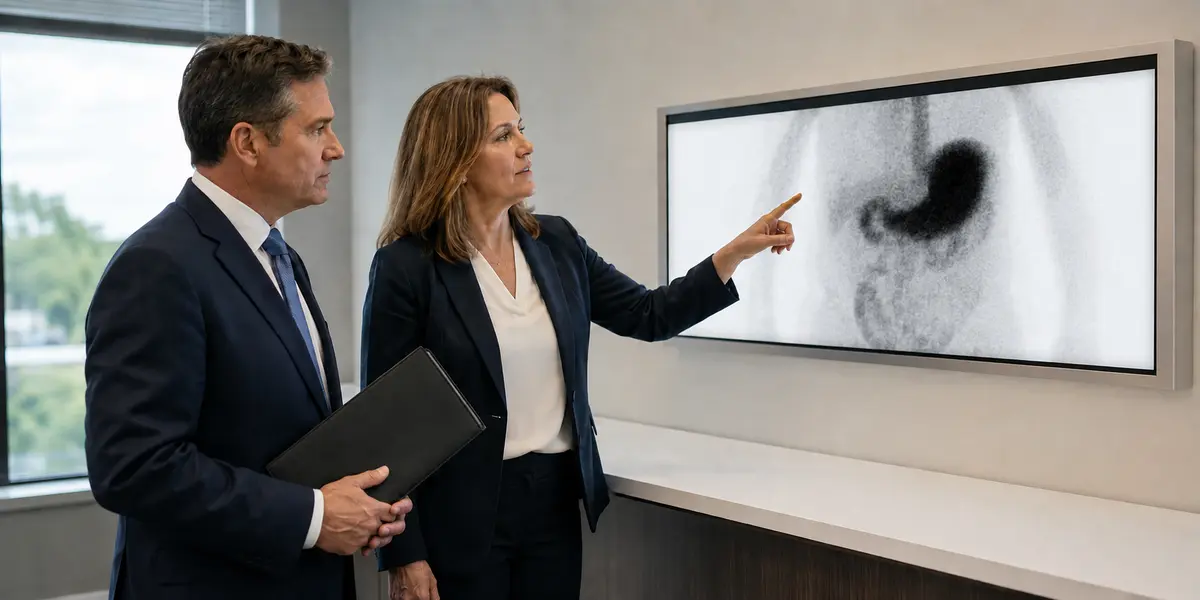
A GLP-1 gastroparesis file turns on three documented facts and the order they occur in: proof the claimant used the drug, a documented gastroparesis diagnosis, and a timeline showing the drug use came before the injury. Gastroparesis is a condition of delayed gastric emptying, where the stomach empties too slowly, and it can cause severe nausea, vomiting, early fullness and abdominal pain. It is often documented with a gastric emptying study, a test that measures how fast the stomach empties, alongside notes ruling out a physical blockage.
The plaintiff's theory depends on sequence: the drug use has to predate the onset of the injury for the claim to hold together. That is why a medical chronology, a date-ordered and source-linked account of the documented care, is the natural screening tool here. It puts the first documented GLP-1 prescription next to the first documented symptoms and the diagnosis, so the sequence is visible at a glance rather than buried across providers.
A note on the line we hold. LezDo TechMed organizes, cross-references and flags what the records document. Whether those facts establish causation, and whether a given file is viable for the MDL, is the attorney's and the retained experts' call, not ours.
Why the timeline is the whole ballgame
The timeline decides more than the diagnosis, because a real gastroparesis diagnosis does not help the claim if it predates the drug. Picture a claimant who reports Ozempic use and a gastroparesis diagnosis. On the intake call, it looks strong. In the records, the gastroparesis diagnosis is dated two years before the first documented prescription, and the chart shows long-standing type 2 diabetes.
Diabetes is one of the most common documented causes of delayed gastric emptying, so that file carries a confounder and a sequence problem that only the records reveal. Surface it during intake screening and the attorney can make an informed call early. Miss it, and the file may travel deep into discovery before the problem shows up, which is the expensive way to learn it.
Screen your GLP-1 intake against the record, fast
Where GLP-1 intake screening breaks down
GLP-1 intake screening breaks down where the volume is highest and the records are thinnest. A firm can hold thousands of signed leads and still not know which ones the medical records support. The common failure points are consistent across mass tort inventories.
- Drug use is self-reported on the intake call, with no pharmacy or prescription record to confirm the drug, the dose, or the dates.
- A gastroparesis diagnosis is claimed, but the records hold no objective study and no note ruling out a physical obstruction.
- Confounders such as diabetes, prior gastrointestinal disease, or other medications that slow gastric emptying are never surfaced.
- Records from key providers, the prescriber and the treating gastroenterologist, are missing from the file.
- The sequence is never checked, so a diagnosis that predates the drug use goes unnoticed.
What a court-ready GLP-1 timeline documents
A court-ready GLP-1 screen documents five things from the records, in order, so the attorney can triage the file quickly.
- Documented drug use. Pharmacy records, prescriptions and medication lists showing the GLP-1 drug, dose, and start and stop dates.
- Documented diagnosis. The treating physician's gastroparesis diagnosis, any gastric emptying study, and endoscopy or imaging that addresses obstruction.
- The sequence. Symptom onset and diagnosis dates placed relative to the first documented GLP-1 use, so the order is clear.
- Alternative causes, flagged. Diabetes, prior gastrointestinal conditions, and other medications known to delay gastric emptying, surfaced rather than buried.
- The clinical course. Hospitalizations, treatment, and whether the symptoms persisted, so the file's severity is visible.
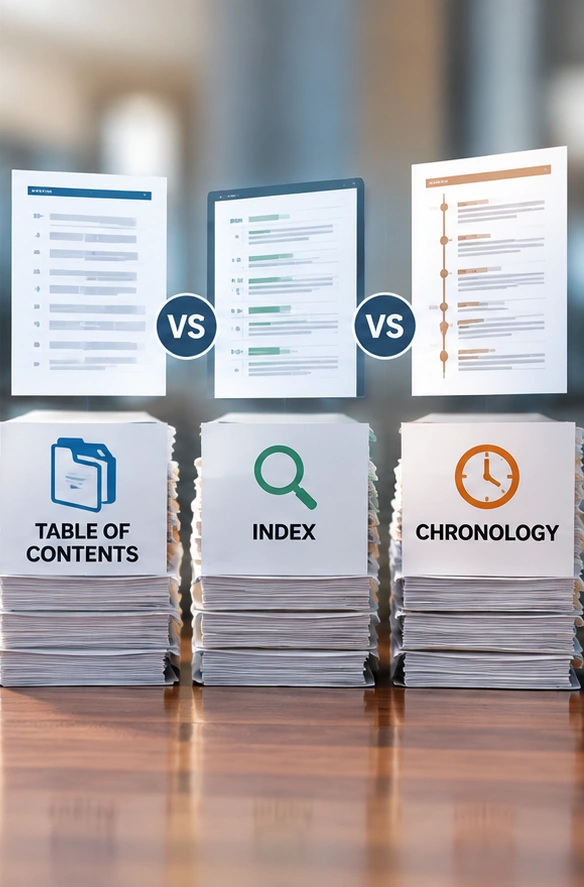
Getting there depends on retrieval and organization more than anything clever. Fast sorting and indexing turns a scattered set into a navigable one, and medical record retrieval chases the pharmacy and specialist records that make or break the timeline.
In the GLP-1 cases, the drug-use date and the diagnosis date decide more than the diagnosis itself.
How high-volume firms keep intake moving
High-volume firms keep GLP-1 intake moving by screening every file against the same record-based checklist instead of the intake call. The workflow is practical: retrieve the pharmacy and treatment records, sort and index them, build a short screening chronology that puts drug-use and diagnosis dates side by side, and flag the confounders up front. AI-assisted extraction handles the volume and medical and paramedical reviewers check the detail, with every deliverable passing a three-layer quality-control review.
That is where a records partner earns its place in a mass tort. LezDo TechMed surfaces and organizes the documented facts and flags what is missing or inconsistent. The attorney decides which files to advance, and the retained experts speak to causation.
Questions to ask before you advance a GLP-1 file
- Is there pharmacy or prescription proof of GLP-1 use, with drug, dose and dates?
- Is the gastroparesis diagnosis documented, ideally with a gastric emptying study?
- Does the first documented drug use predate the symptom onset and the diagnosis?
- Is there documented diabetes or another cause of delayed gastric emptying to weigh?
- Are the prescriber and gastroenterology records complete, or is something missing?
Screening speed that keeps up with intake
24 to 48 hrs
Sorting and indexing
LezDo TechMed sorts and indexes incoming records in 24 to 48 hours, depending on volume, file condition and scope.
3 layers
Quality-control review
Every deliverable passes a three-layer quality-control review supported by medical and paramedical reviewers.
99.8%
Published accuracy rate
LezDo TechMed's published company accuracy figure, supported by three-layer review; a company-level figure, not a guarantee.
Frequently asked questions
What is the GLP-1 / Ozempic gastroparesis lawsuit about?

The GLP-1 lawsuits allege that GLP-1 receptor agonists such as Ozempic and Wegovy caused gastroparesis and other gastrointestinal injuries, and that the manufacturers failed to adequately warn. The federal cases are consolidated in MDL 3094 before Judge Karen Marston in the Eastern District of Pennsylvania. General causation is contested and remains a central issue in the litigation.
What is gastroparesis?
Gastroparesis is a condition of delayed gastric emptying, meaning the stomach empties its contents too slowly without a physical blockage. It can cause severe nausea, vomiting, early fullness, bloating and abdominal pain. It is commonly documented with a gastric emptying study, which measures how quickly the stomach empties.
What medical records show GLP-1 use before the injury?
Pharmacy records, prescription histories and medication lists document the GLP-1 drug, its dose, and the start and stop dates. Placed against the first documented symptoms and the diagnosis, these records show whether the drug use came before the onset of the injury, which is the sequence the claim depends on.
How is a gastroparesis diagnosis documented in the records?
A gastroparesis diagnosis is documented by the treating physician and is often supported by a gastric emptying study, with endoscopy or imaging used to rule out a physical obstruction. A records review can locate and organize these entries; the diagnosis itself is made by the treating clinicians, not by a records team.
Why does the drug-use-before-onset timeline matter in GLP-1 cases?
The plaintiff's theory depends on the drug use predating the injury, so a diagnosis that appears before the first documented drug use undercuts the claim's sequence. Because the timeline can flip a file from promising to problematic, it is one of the first things to screen, and only the dated records reveal it.
What can weaken a GLP-1 gastroparesis claim?
Common weaknesses include no pharmacy proof of drug use, a claimed diagnosis with no objective study, a diagnosis that predates the drug, and documented alternative causes of delayed gastric emptying such as diabetes or prior gastrointestinal disease. These are facts for the attorney and experts to weigh; a records team surfaces and flags them.
Where does the GLP-1 MDL stand in 2026?
As of mid-2026, MDL 3094 held roughly 3,600 pending cases, the court had largely denied the motion to dismiss in August 2025, and the parties were in expert and general-causation discovery. No bellwether trial date had been set. Litigation status changes quickly, so confirm the current docket.
How fast can LezDo TechMed screen mass tort intake records?
LezDo TechMed sorts and indexes incoming records in 24 to 48 hours, and standard chronology and review deliverables are generally completed within 48 hours once scope is confirmed, depending on record volume and file condition, with 24-hour expedited delivery where feasible. These timelines support the rapid, high-volume screening a mass tort inventory calls for.
The bottom line
In a bellwether crunch, speed without documentation is a liability, not an advantage. The GLP-1 files that hold up will be the ones whose records show the drug use, the diagnosis, and the order between them, with the confounders already flagged. The firms that get there first are not the ones with the most leads. They are the ones who screened the records early, while there was still time to fix a gap or let a weak file go.
Facing a wall of GLP-1 intake before the next MDL deadline? Explore LezDo TechMed's medical record review support for mass tort claimant screening, or start with a free trial and see the timeline on a sample of your own files.
Source Credit : All metrics derived from LezDo TechMed’s internal project data.
Jebisha Jenishofen
Jebisha Jenishofen is a Certified Legal Nurse Consultant and Medical–Legal Research Analyst with over five years of experience in the medical-legal industry. She specializes in medical record analysis, medical-legal research, and content development, creating clear and informative resources on personal injury, medical malpractice, insurance claims, and healthcare litigation. By combining clinical knowledge with research expertise, she transforms complex medical information into practical insights for medical-legal professionals.












.png)