Home
>
Blog
>
>
Paralegal or Legal Nurse: Who Should Summarize a Deposition?
Who should summarize a deposition comes down to what the witness testified about. Here is what this guide covers:
- The paralegal's edge: knowing the case file, the pleadings and the exhibits before anyone opens the transcript.
- Where clinical reading counts: terminology, anatomy, medications and prior conditions that read as ordinary English to an untrained eye.
- The party California excludes: a state rule bars the court reporter who took the deposition from helping prepare the summary.
- A three-answer test: a way to check whether your current reviewer is the right one for this transcript.
Read on for where each one is stronger, and why most firms end up using both.
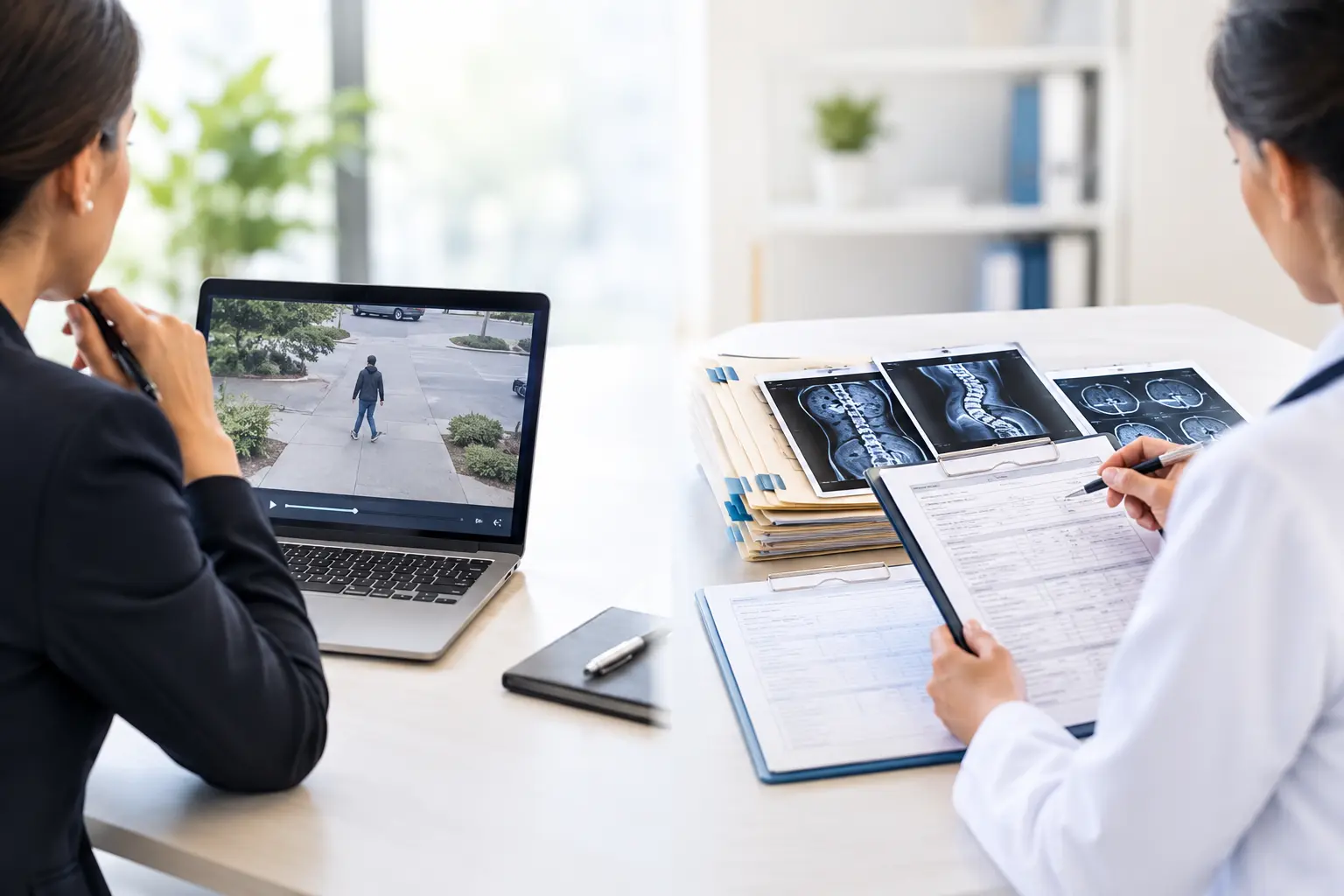
Forty minutes of a treating physician's deposition go to one disc level. Halfway through, he corrects himself about which side, and nobody circles back to it. Whether that correction turns up in your summary has less to do with the software than with who is reading the transcript.
So who should summarize a deposition: your paralegal, or a legal nurse consultant?
The transcript decides. A deposition about a breached supply contract and a deposition about a lumbar fusion need different readers, and staffing both the same way is how firms end up rewriting summaries the week before trial.
What the summarizer actually decides
Summarizing a deposition is a series of judgment calls, not a typing job. Which answers bear on the claims. Which words to quote exactly instead of paraphrasing. Whether a witness restated an answer or changed it. What to flag as unclear rather than smooth over.
Both a paralegal and a legal nurse consultant make those calls. They just bring different training to them, and the gap only shows up on certain transcripts. On plenty of depositions you will not see a difference at all, which is worth saying plainly before anyone reorganizes their staffing around this.
Two Benches, Not One
LezDo TechMed's review team includes 45+ certified paralegals alongside 90+ licensed nurses and doctors. Deposition work is routed by what the testimony demands, not by who happens to be free.
Where a paralegal is stronger
A paralegal who has lived with the matter starts ahead of any outside reader. They know what was pleaded, what discovery has already produced, which exhibits the attorney keeps coming back to, and what the last summary got asked to fix. That context is not something a clinical credential replaces.
It shows up in small ways. The witness mentions a document by a nickname the file uses, and the paralegal knows which exhibit number that is. Opposing counsel circles a topic that was fought over at a discovery conference in March, and the paralegal recognizes why. An outside reviewer gets there eventually, but not on the first transcript.
There is a volume argument too, and it is the one firms usually feel first. A mid-sized PI practice may see twenty depositions in a quarter, and the majority of them are fact witnesses saying ordinary things about ordinary events. Sending all twenty out for clinical review prices the exception into every transcript.
Procedure is the other half. Objections, instructions not to answer, errata, and the deadlines around them sit inside a paralegal's daily work. So does cost: for a fact witness in a straightforward liability case, routing the transcript out for clinical review buys you very little. We have written separately about what deposition summaries do for paralegals in the run of ordinary case work.
Not sure which transcripts need a clinical reader?
Where clinical reading changes things
Clinical training earns its place when the testimony turns on medical language that looks ordinary to an untrained reader. That is a narrower set of depositions than vendors like to suggest, and a wider set than most firms assume.
Consider a witness who says the pain "went down the back of the leg" and, sixty pages later, agrees with counsel's phrasing of "radicular symptoms." Those may describe the same thing. They may not. A summary that silently treats them as one loses a distinction the attorney might want. Same with a drug named by brand in one answer and by generic in another, or a witness who says "I had some trouble with that knee years ago" in the middle of a paragraph about something else.
None of that is diagnosis. The reviewer is not deciding what the condition is or what caused it. The reviewer is noticing that two passages might not be saying the same thing, and putting both in front of the attorney with the citations attached. Testimony from a treating provider is where this comes up most, and we have gone deeper into summarizing treating physician testimony elsewhere.
Worth adding: this is a different question from whether a human should check AI output. That one we have covered in legal nurse review of AI-assisted summaries. Here the comparison is between two people, both of whom can read.
The transcript decides who should read it. Not the calendar.
The one California rules out
In California, the court reporter who took the deposition cannot help prepare the summary of it. Title 16, section 2474 of the California Code of Regulations makes it unprofessional conduct for a certified shorthand reporter to transcribe or assist in preparing a deposition summary after the deposition they reported.
The rule is narrow, and worth reading before anyone cites it broadly. It binds California-licensed court reporters, not paralegals and not nurses, and the summaries it describes are the ones carrying attorney analysis, case evaluation or strategy. If your firm has ever asked a reporting agency to bundle a summary with the transcript, that is the rule to look at first.
A three-answer test
Before you decide who should summarize a deposition, run this on a transcript you already have. Pull three answers that matter and hand them to the person you are considering:
- An answer where the witness used a clinical term and a plain-English phrase for what may be the same thing.
- An answer the witness corrected later in the session.
- An answer that refers to an exhibit by something other than its number.
Ask what each one means and how they would record it. You will learn more from those three responses than from any credential list. Most readers handle one or two comfortably. The one they struggle with tells you what that transcript needs.
How LezDo TechMed Staffs the Read
45+
Certified Paralegals
Procedural and case-file context on the team that reads your transcripts.
90+
Licensed Nurses and Doctors
Clinical reading for depositions that turn on medical language.
3
Layers of Quality Control
Every summary is checked before it goes back to the attorney.
Frequently asked questions
Can a paralegal summarize a medical deposition?

Yes, and many do it well, particularly when they know the case file. The limit shows up when testimony turns on clinical terminology, anatomy or medication names, where a reader without clinical training may treat two different statements as the same one.
When is clinical training worth paying for on a deposition summary?
When the deponent is a treating provider or retained medical expert, when prior conditions are contested, or when the testimony moves between clinical terms and plain description of the same symptoms.
Can a court reporter prepare the deposition summary?
Not in California, for the deposition they reported. Title 16, section 2474 of the California Code of Regulations makes it unprofessional conduct for a certified shorthand reporter to transcribe or assist in preparing that summary. Other states differ, so check your own rules.
Who should summarize a deposition in a medical malpractice case?
Usually someone with clinical training, because the testimony tends to turn on treatment decisions, timing and terminology. A paralegal who knows the file should still set the issues the summary is organized around.
Does every deposition need a clinically trained reviewer?
No. Fact witnesses, corporate representatives and routine liability depositions rarely need one. Routing every transcript that way adds cost without adding much.
Who checks the summary before the attorney sees it?
At LezDo TechMed, each deposition summary passes a three-layer quality-control process before delivery, and medical and paramedical professionals read the clinical testimony.
Why most firms use both
Most litigation teams that handle medical claims end up splitting the work rather than choosing a side. Fact witnesses, corporate representatives and straightforward liability depositions stay in-house with the paralegal who knows the file. Treating providers, retained medical experts and anything touching prior conditions go to someone with clinical training. The routing rule is the testimony, and it takes about thirty seconds to apply once the transcript is in hand.
Getting the routing wrong is rarely dramatic. Nobody notices on delivery day. It surfaces later, when an attorney preparing cross reads the summary, goes back to the transcript to check a point, and finds something in the surrounding answers that never made it across. At that stage you are not editing a summary, you are reading the transcript yourself, which is the work you paid to avoid.
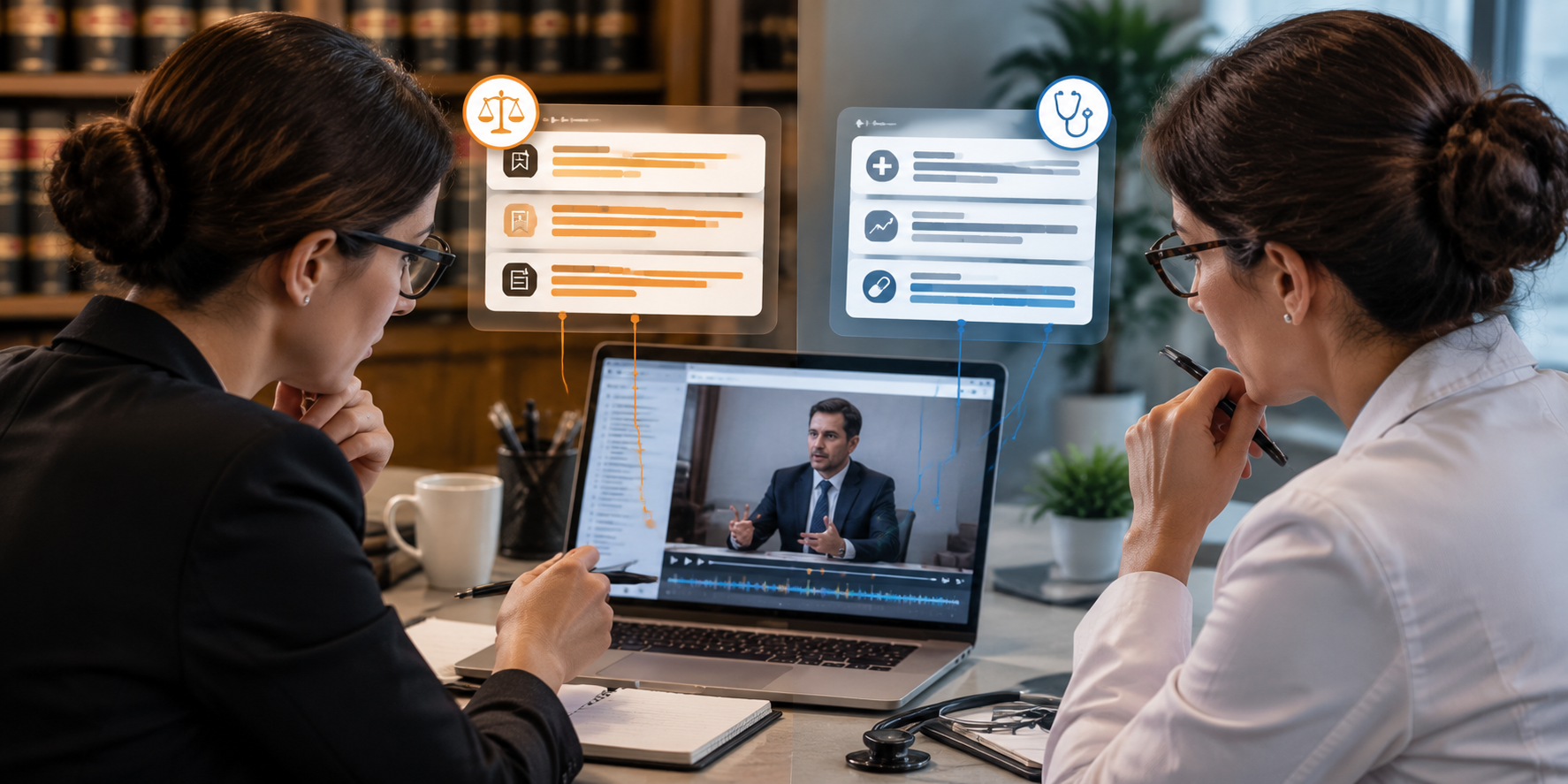
That split is also why LezDo TechMed's deposition summary services put both on the same bench. The transcript goes to whoever the testimony calls for, and each summary passes a three-layer quality-control check before it comes back.
Where the summary stops
Whoever reads the transcript, the job ends in the same place. A summary records what the witness said, marks where to find it, and points out where two answers may not line up. It does not rank the witness's reliability, assign fault, or put a value on the claim. Those belong to counsel and the retained experts, and a summary drifting toward them has quietly turned into something else.
So the question was never which profession is better at this. It is which reader can get through this particular transcript without dropping anything. Look at the deposition first. The staffing answer follows.
Source Credit : All metrics derived from LezDo TechMed’s internal project data.
Anjana Devi Vijay
Anjana Devi Vijay is a Certified Legal Nurse Consultant (CLNC) and Medical–Legal Research Analyst with 9+ years of experience in medical record review, deposition summary analysis, and medico-legal research. She specializes in transforming complex healthcare documentation into accurate, actionable insights that support attorneys, insurers, and medical evaluators. With expertise in clinical documentation analysis and legal case support, she creates research-driven content focused on improving decision-making and case outcomes.












.png)