Home
>
Blog
>
>
Who Is Accountable When an AI Medical Chronology Is Wrong?
- The tool isn't accountable. You are. AI vendors disclaim liability and the software holds no license, so an AI medical chronology's errors fall on the professional who relied on it.
- Even purpose-built legal AI hallucinates. A Stanford study found leading legal AI research tools hallucinated 17% to 34% of the time.
- Speed isn't the risk. Silence is. A one-hour chronology is only as safe as the human who verified it.
- I'm not anti-AI. I believe in the human loop. As a legal nurse consultant, I catch what the algorithm can't: subtle lab trends, omitted nursing assessments, and the "why" behind a decline.
- Ask four questions: who reviews the output, how is accuracy measured, how are errors monitored, and who is accountable when it's wrong.
I have spent years reading medical records, and I have watched the pitch change. Feed a tool thousands of pages and get a finished chronology back in an hour, sometimes in minutes. The speed is real, and when you are buried in records, it is genuinely tempting.
But there is a question the marketing never answers, and it is the one I keep coming back to. When that AI medical chronology is wrong, who is accountable?
I ask because I know how these errors behave. An AI model can produce a confident, fluent entry that no record supports, invent a date, or quietly drop the prior condition a case turns on. And when it does, the software cannot be deposed, cannot be sanctioned, and holds no professional license. Read the vendor's terms and you will usually find the output described as "informational," with liability disclaimed.
So the accountability does not vanish because a machine made the mistake. It moves. It settles on the attorney who filed the report, the expert who relied on it, and the professional whose name is on the work. In my experience, that is the part people realize too late. This is where I think that line actually falls, and what it takes for a fast chronology to also be one you can stand behind.
The Numbers Behind the Question
Even purpose-built legal AI tools hallucinated 17% to 34% of the time in a Stanford study, and courts have already sanctioned lawyers for filings built on AI-fabricated content.
Who is accountable for an AI medical chronology, really?
Follow the chain the way I do, because it matters. The vendor writes liability out of the contract. The software carries no duty of care and cannot answer to a licensing board. That leaves one place for accountability to land: the licensed human who used the output and signed the work.
The courts have already made this concrete. In Mata v. Avianca, a lawyer filed a brief with six fabricated cases produced by a chatbot, and the court imposed a $5,000 sanction and ordered him to notify every judge named in the invented opinions. That was 2023. Since then, researchers tracking the problem have logged more than 700 filings worldwide containing AI-hallucinated content, most of them recent. In every one, the consequence fell on the person, never the program.
The professional-responsibility rules point the same way. A signer is responsible for the accuracy of a filing however it was produced, and competence now includes understanding the risks of the technology you use. In plain terms, and I say this as general information rather than legal advice: if an AI medical chronology gets a fact wrong and it reaches your report, that is your error to answer for, not the tool's. I have never seen an algorithm take the stand to explain itself.
Not sure who actually verified your chronology?
What AI misses, and why it becomes your problem
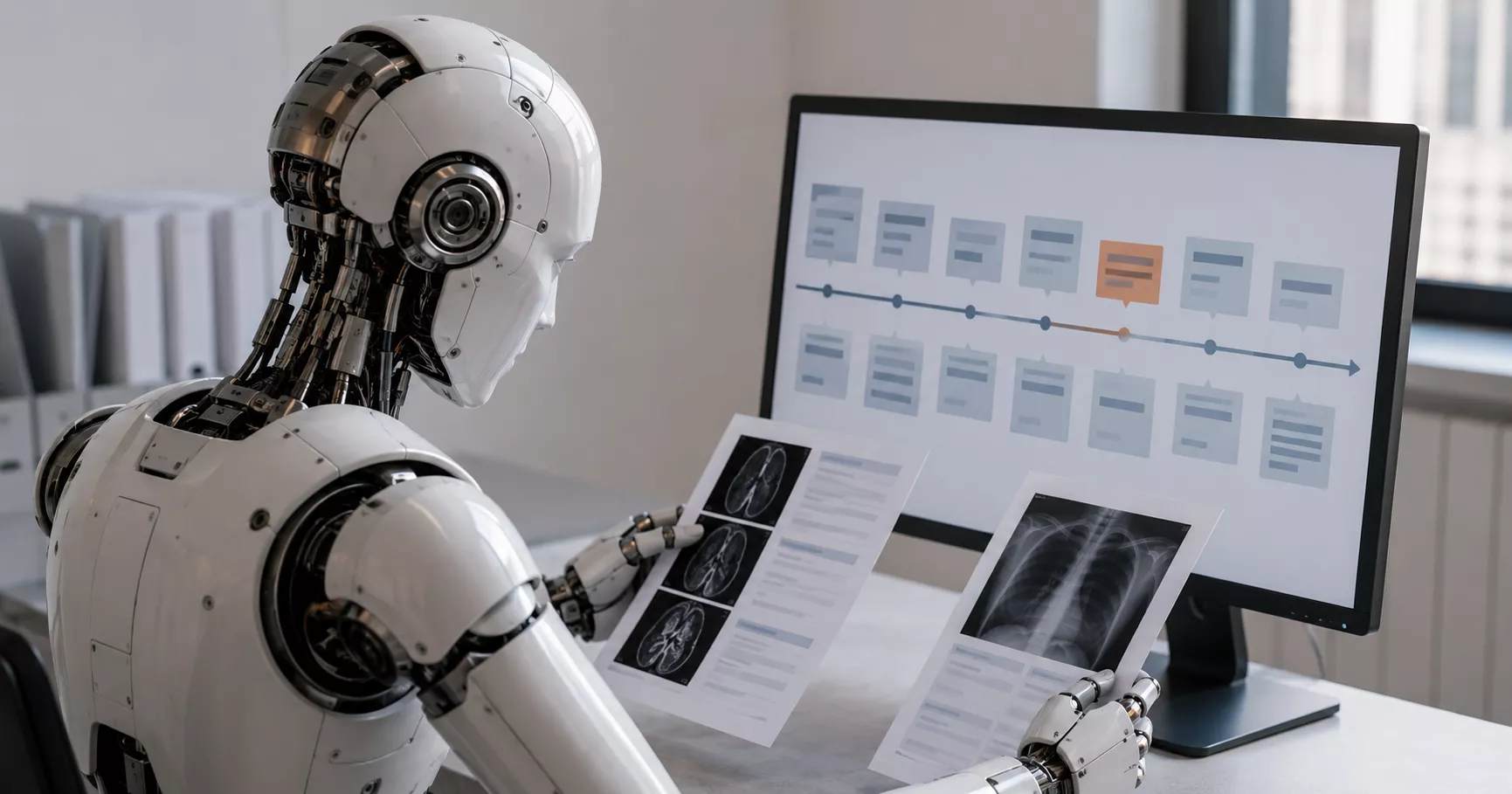
AI is genuinely good at volume. What it is not good at is clinical context, and that is exactly where I have seen cases turn. A model can list every lab value and still miss the subtle trend across three visits that signals a decline. It can summarize a hospital stay and skip the nursing assessment that documents the moment a patient's condition actually changed. It captures the "what" and misses the "why," and in a medical-legal file the "why" is usually the whole point.
The hard part, and the reason I read to the last page, is that these errors do not announce themselves. A hallucinated entry reads exactly like a verified one. That Stanford study of leading legal AI research tools found they hallucinated between roughly one in six and one in three answers, and those were tools built specifically for law and tested by researchers. General models handed raw medical records are not safer.
The oversight gap is real too. A 2026 federal lawsuit against Mayo Clinic alleges that staff concealed a 67% error rate in an internal AI assistant and that ten separate whistleblower reports raised concerns. Those are allegations, not established findings, and Mayo has denied wrongdoing. But the case names the exact fear I carry into every AI-generated file: that the errors are there, and no one is measuring or answering for them.
When an AI medical chronology is wrong, the machine doesn't answer for it. Someone with a license does.
I'm not anti-AI. I believe in the human loop
I want to be clear, because this gets misread. I am not against AI. I think it should do the first pass. Let it carry the volume, extract, and draft, and it will do that faster than any manual process. My argument is about what has to happen next, before a chronology becomes something anyone relies on.
A qualified human has to review it, check it against the source records, and be willing to stand behind it. In medical-legal work, that is my job as a legal nurse consultant. I read the chart the way a clinician does. I catch the lab trend and the omitted assessment the algorithm skimmed past. I trace each entry back to the page it came from, and I flag what is missing as clearly as what is present. When I am done, a licensed professional's judgment is behind the record, not just an algorithm's confidence.
There is a line I do not cross, and it matters here. I do not diagnose, and I do not decide the case. I organize the documented evidence, cross-reference it, and flag the gaps, inconsistencies, and prior conditions so the people who make the call, the physician and the attorney, are working from a verified, traceable record. That division is the point of the human loop. The tool should make the work faster. It should never quietly make a finding that no one verified.
Before you trust any AI medical chronology, ask the vendor these questions, and listen for a straight answer:
Who reviews the output? How is accuracy measured? How are errors and unusual patterns monitored? And who is accountable when the system gets something wrong?
If those answers are vague, the accountability no one is naming becomes yours by default. A one-hour chronology is easy to sell. A chronology you can file, defend at deposition, and trace to the record is a different thing, and the difference is a licensed human who verified it and will answer for it.
I am not asking you to slow down. Speed is worth having. It is just not worth having alone. Pair it with a clinical reviewer's judgment and accountability, and the record moves fast and still holds up. Ask the four questions, and make sure the name behind your AI medical chronology belongs to someone who can stand behind it.
AI Errors, By the Numbers
17-34%
AI Hallucination Rate
How often leading legal AI research tools hallucinated in a Stanford study.
700+
Court Filings Flagged
Filings worldwide logged with AI-hallucinated content since 2023.
$5,000
Sanction in Mata v. Avianca
For a brief built on six fabricated, AI-generated case citations.
Frequently asked questions
Who is responsible if an AI medical chronology is wrong?

In most cases the AI vendor disclaims liability and the software holds no professional license, so responsibility flows to the professional who relied on the output, the attorney, expert, or firm who used it. That is why a qualified human reviewer who verifies the chronology and stands behind it matters. This is general information, not legal advice.
Are AI-generated medical chronologies accurate?
AI is strong at processing large volumes but can hallucinate and miss clinical context. A Stanford study found leading legal AI research tools hallucinated 17% to 34% of the time. Accuracy depends on a qualified human verifying the output against the source records before anyone relies on it.
Can AI replace a legal nurse consultant?
No. AI can do a first pass on volume, but it cannot supply clinical judgment, catch subtle lab trends or omitted nursing assessments, or be professionally accountable for the result. A legal nurse consultant reviews the AI output, verifies it, and stands behind it.
Do courts accept AI-generated medical summaries or chronologies?
Courts expect filings to be verified regardless of how they were produced, and lawyers have been sanctioned for submissions built on unverified AI content. A chronology reviewed and verified by a qualified human, with entries traceable to the record, is what holds up.
How do I know if a medical chronology was reviewed by a human?
Ask who reviewed the output, how accuracy was measured, how errors are monitored, and who is accountable if it is wrong. Source-linked entries and a named clinical reviewer are the signs of genuine human-in-the-loop review.
Source Credit : All metrics derived from LezDo TechMed’s internal project data.
Janu Padmaprasad
Janu Padmaprasad is a certified Legal Nurse Consultant with seven years of experience in the medical-legal ecosystem. She understands the operational and evidentiary challenges faced by injury attorneys, medical evaluators, life care planners, and insurance professionals. By combining her research insights with expertise in medical chronology preparation, she writes solution-driven articles on medical data analysis that help medical-legal experts strengthen case outcomes and enhance their business operations.













.png)