The most common shorthands Physician use in a Medical Record
One misunderstood shorthand in a medical record can change the direction of an entire case—accuracy starts with understanding every abbreviation.
You, me, and every one of us are prone to the use of shorthands in our daily life. Since the beginning of the digital era, we have all had a fast-paced life, and time has become one of the biggest constraints. This has introduced us to the usage of shorthands in our lives.
We use numerous shorthands with our friends over chat. We never spell a word on the whole while texting, just to save time and also our laziness to type.
In the case of physicians, they have heaving responsibilities, making them vulnerable to a hectic schedule. Scribing a medical record consumes humongous time as it may even last more than a thousand pages in most cases.
As we know, a medical record is a complete record of the medical history of a patient with all the details from medications, diagnoses, and tests inscribed in it. This compels physicians to use numerous shorthands in order to save time. The usage of abbreviations and acronyms in a medical record is a fragile move, as it may go wrong in some cases.
In this blog, we will have a detailed look at – what shorthand doctors use the most, the downside of their usage in medical records, and the solution provided by the firms that provide medical records review services.
LezDo TechMed provides top quality medical record reviews with all the shorthands deciphered for you.
70% Fewer Interpretation Errors
Professional reviewers cut shorthand errors by 70%, ensuring clear and accurate claims.
What are shorthands in medical records?
The shorthands in a medical record are the abbreviations, acronyms, or any medical codes used to represent a medical term or practice. This has been a prominent tactic followed by physicians in order to save time. Although this has been in practice for a very long time, most common people or personal injury lawyers are not familiar with it.
Shorthand, in some cases, even has more than one meaning, leading the common people and lawyers to be confused. However, in any case, the usage of shorthands in medical records is not going to be pulled away from the practice. It is better to equip ourselves with some of the common shorthands used in medical records.
The downside of the usage of shorthands
The usage of shorthands in medical records has not turned out to be very good practice. It has gone wrong on many occasions. Although there have been many unified codes and laws, abbreviations have been misunderstood and resulted in wrong actions.
In some cases, the lab technicians have misunderstood the shorthand used by the physician and preceded with irrelevant tests on the patient. In some cases, it has also led to serious affliction on patients.
When we consider personal injury claims, the role of medical records in receiving a reasonable claim amount is crucial. A lawyer is a person who is a professional in law and legal terms, whereas medical terms are not his cup of tea.
But in the case of a personal injury claim, the data in the medical record is to be understood thoroughly by reviewing it and summarizing it into a medical record review report. This is a two- or three-pages report that includes only the crucial points that will help the client receive deserving compensation.
The problem is that the lawyers may not be aware of all medical shorthands. In some cases, the meaning of the shorthands may differ in different medical organizations. This may lead to misunderstandings.
The lawyer may mistake a shorthand that is a severe medical problem for a non-serious one and may not include it in his key points to the session with the jury. This will definitely decrease the claim amount the client may be worthy of receiving.
Looking for quality record reviews? Hurry up to get free trial worth $500!
A medical record review service provider is a team of professionals in the medical arena who review the medical records, understand the medical data of the patient, and prepare a medical record review report. The report summarizes the key details of the medical record for a better understanding of the lawyers and the jury.
As medical record reviewers are experts in the medical arena, they would be aware of all the shorthands used by a physician. Even in cases where the shorthand may have two different meanings, they would figure out what the physician means in the particular case.
So, it is always a better option to consult a medical record review outsourcing company for summarizing a medical record. Outsourcing the medical chart reviewing would help the attorneys save time and get a precise medical record review report.
"Deciphering physician shorthands is not optional—it’s essential for building strong, error-free legal and medical reports."
Common shorthands in a medical record
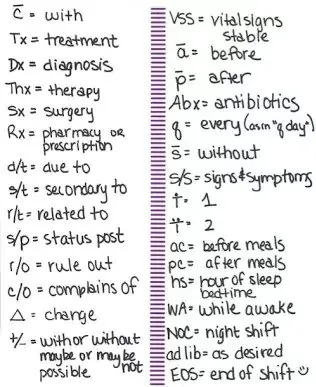
The list below has some of the common medical shorthands and their meanings.
A & P – Anatomy and physiology
Ab – Abortion
Abd – Abdominal
ABG – Arterial Blood Gas
a.c. – Before meals
ac & cl – acetest and clinitest
ACLS – advanced cardiac life support
AD – right ear
ADL – activities of daily living
ad lib – as desired
adm – admission
afeb – afebrile, no fever
AFB – acid-fast bacillus
AKA – above the knee
Alb – albumin
alt dieb – alternate days (every other day)
am – morning
AMA – against medical advice
ARDS – acute respiratory distress syndrome
AS – left ear
ASA – aspirin asap
(ASAP) – as soon as possible
AU – both ears
BE – barium enema
Bid – twice a day
bil, bilateral – both sides
BK – below knee
BKA – below the knee amputation
Bl – blood
bl wk – blood work
BLS – basic life support
BM – bowel movement
BOW – bag of waters
B/P – blood pressure
Bpm – beats per minute
BR – bed rest
c-spine – cervical spine
CA – cancer
CAD – coronary artery disease
Cal – calorie
CAT – computerized axial tomography
Cath – catheter
CBC – complete blood count
CCU – coronary care unit, critical care unit
CHD – coronary heart disease
CHF – congestive heart failure
CHO – carbohydrate
Chol – cholesterol
D & C – dilation and curettage
DAT – diet as tolerated
DNA – deoxyribonucleic acid
DNR – do not resuscitate
DOA – dead on arrival
DOB – date of birth
DPT – diphtheria, pertussis, tetanus
DRG – diagnosis-related grouping
D/S – dextrose in saline
DT’s – delirium tremens
EBL – estimated blood loss
ECG – electrocardiogram
ED – emergency department
EEG – electroencephalogram
EENT—eyes, ears, nose, throat
EKG – electrocardiogram
EMG – electromyogram
EOA – esophageal obturator airway
ESR – erythrocyte sedimentation rate
FBOA – foreign body obstructed airway
FBS – fasting blood sugar
FBW – fasting blood work
FF (F. Fl) – force fluids
FH – family history
FHS – fetal heart sounds
GB – gallbladder
GI – gastrointestinal
GU – genitourinary
GTT – glucose tolerance test (pancreas test)
gtt(s) – drop(s)
gyn – gynecology
H & H – hemoglobin and hematocrit
HCG – human chorionic gonadotrophin
Hct – hematocrit
HDL – high-density lipoprotein
ICP – intracranial pressure
ICU – intensive care unit
IM – intramuscular
Ing – inguinal
Inj – injection
IPPB – intermittent positive pressure breathing
IVF – in vitro fertilization
IVP – intravenous pyelogram
K+ – potassium
KCl – potassium chloride
KUB – kidney, ureter, bladder
L – lumbar
L & D – labor and delivery
LDL – low-density lipoprotein
Liq – liquid
LLQ, LLL – left lower quadrant (abdomen)
lobe (lung)
LMP – last menstrual period
LOC – level of consciousness
LP – lumbar puncture
MAST – medical antishock trousers
MCI – mass casualty incident
MI – myocardial infarction
Os – mouth
OS – left eye
OU – both eyes
PET – positron emission tomography
PH – past history
pH – hydrogen ion concentration
PID – pelvic inflammatory disease
q – every
qd – every day
qh – every hour
q2h, q3h, …—every two hours, every three hours, …
qhs – every night at bedtime
qid – four times a day
qns – quantity not sufficient
qod – every other day
qs – quantity sufficient
RAIU – radioactive iodine uptake study
RBC – red blood cell/count
reg – regular
Rh – rhesus
RK – radial keratomy
RL – ringer’s lactate
RLQ, RLL – right lower quadrant (abdomen), lobe (lung)
RML – right middle lobe (lung)
SGOT – serum glutamic oxaloacetic transaminase
SGPT – serum glutamic pyruvic transaminase
SIDS – sudden infant death syndrome
Sig: – label/write
SL – sublingual
SMAC – sequential multiple analysis computer
SOB – shortness of breath
SVD – spontaneous vaginal delivery
SVN – small volume nebulizer
TIA – transient ischemic attack
TUR – transurethral resection
TV – tidal volume
TVH – total vaginal hysterectomy
URI – upper respiratory infection
US – ultrasonic
UTI – urinary tract infection
V/S – vital signs
WA – while awake
WBC – white blood cell/count
w/c – wheelchair
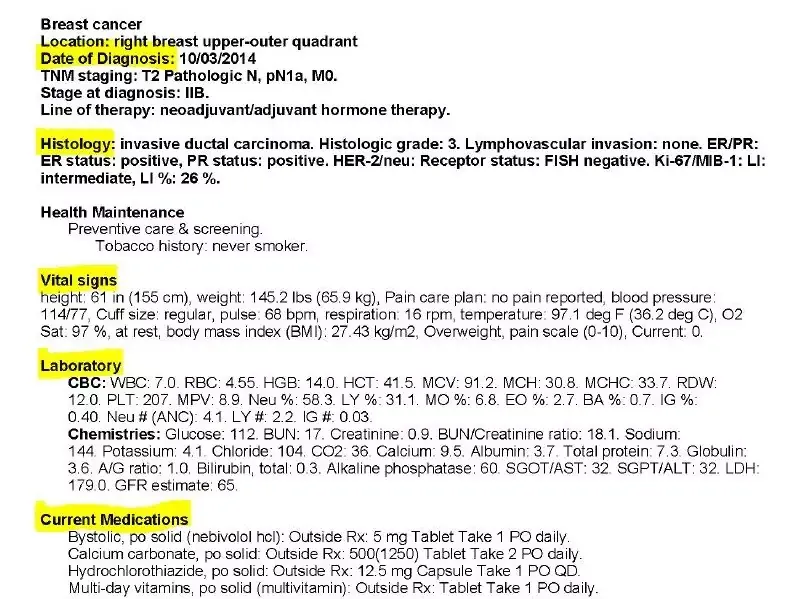
See the sample medical record with all shorthands.
Medical shorthands are abbreviations, acronyms, or medical codes used by physicians to document diagnoses, treatments, tests, and instructions quickly within medical records.
Why do doctors use shorthands in medical records?
Physicians use shorthands to save time while documenting patient care, especially when dealing with lengthy and complex medical records that can span hundreds or thousands of pages.
Can medical shorthands have more than one meaning?
Yes. Many medical abbreviations can have multiple meanings depending on the context, specialty, or healthcare facility, which increases the risk of misinterpretation.
Why are medical shorthands risky in personal injury and legal cases?
Misunderstanding shorthands can lead to incorrect interpretation of diagnoses, severity of injuries, or treatment outcomes, which may weaken legal arguments and reduce claim value.
Are attorneys trained to interpret medical abbreviations accurately?
Most attorneys are legal experts, not medical professionals. While experienced attorneys may recognize some terms, fully understanding medical shorthands often requires medical expertise.
How can misinterpreted shorthands affect a personal injury claim?
Incorrect interpretation may cause critical injuries or complications to be overlooked, resulting in incomplete case arguments, weaker negotiations, and lower compensation amounts.
Do medical shorthands vary between hospitals and providers?
Yes. Different hospitals, specialties, and physicians may use different abbreviations for the same condition or use the same shorthand to mean different things.
How do medical record review services help with shorthands?
Medical record review services employ trained medical professionals who accurately decode abbreviations, understand clinical context, and ensure precise interpretation of medical data.
Can medical record reviewers identify ambiguous or unclear shorthands?
Yes. Expert reviewers analyze surrounding clinical notes, lab results, and treatment plans to determine the correct meaning of ambiguous abbreviations.
Are shorthand errors common in medical records?
Yes. Shorthand-related errors are common and have historically caused diagnostic mistakes, treatment delays, and documentation inaccuracies.
To sum up,
Hope you are now aware of some of the common shorthands used by physicians in medical records. It is very crucial to review a medical record without mistaking any of the shorthands for a different meaning.
The medical shorthands are critical at times for your understanding, but with the help of expert medical record review companies like LezDo TechMed you can avail a medical record review service and benefit a full reap of your personal injury claim amount.
Source Credit : All metrics derived from LezDo TechMed’s internal project data.
Janu Padmaprasad
Janu Padmaprasad is a certified Legal Nurse Consultant with seven years of experience in the medical-legal ecosystem. She understands the operational and evidentiary challenges faced by injury attorneys, medical evaluators, life care planners, and insurance professionals. By combining her research insights with expertise in medical chronology preparation, she writes solution-driven articles on medical data analysis that help medical-legal experts strengthen case outcomes and enhance their business operations.












.png)




.webp)