Home
>
Blog
>
>
How Medical Records Help Product Manufacturers Evaluate Injury Claims
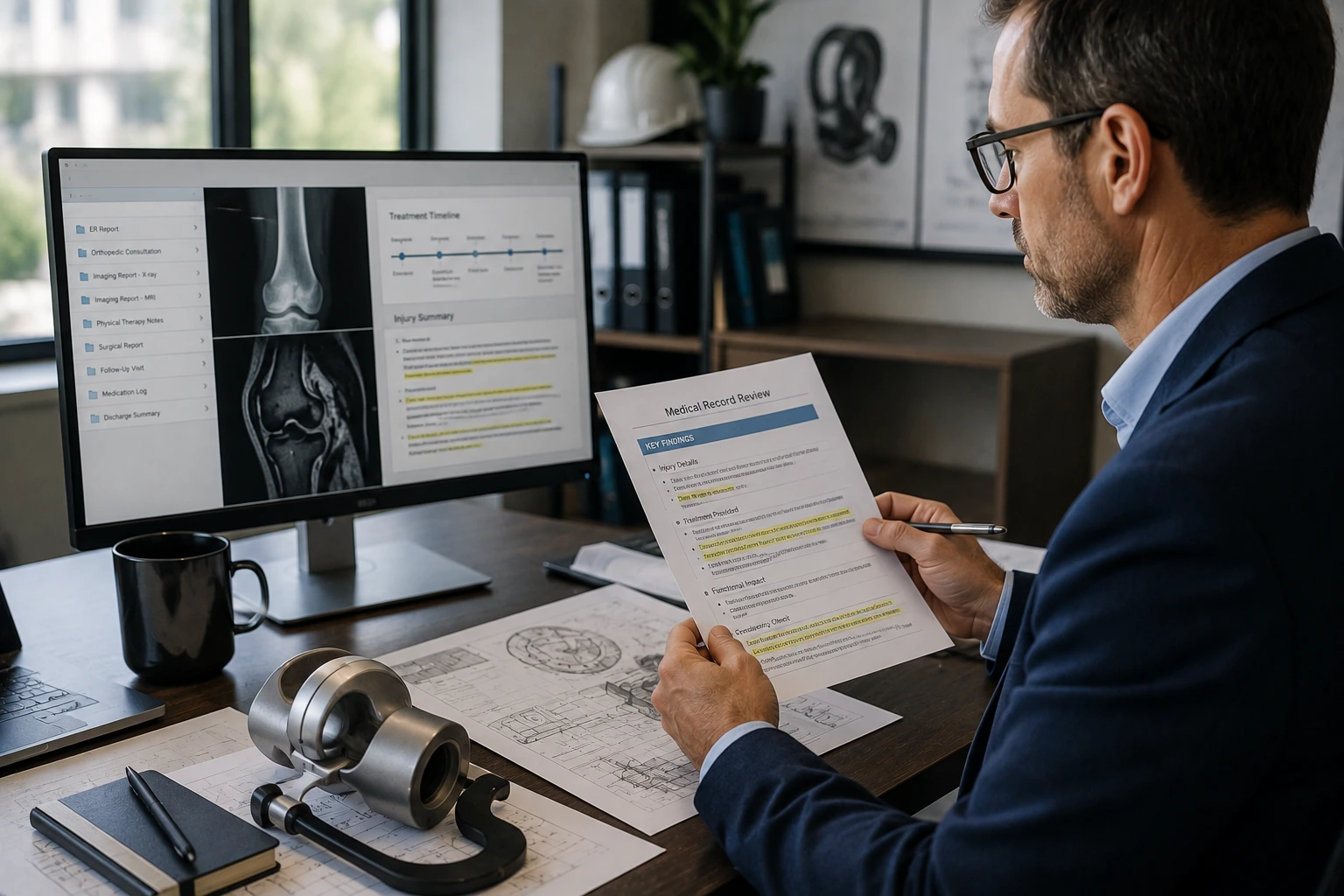
When an injury claim lands on a manufacturer, the medical records decide most of what happens next. Here is what a records review tells a manufacturer's team:
- Whether the product is even in the story: does the record document use of, or exposure to, this product at all?
- Whether the injury is real and documented: the alleged harm, in the treating records, not just the demand letter.
- Whether the timeline holds: did the injury follow the product, or predate it, and is there an alternative documented cause?
- Whether the claim is worth what it asks: the treatment and severity the records actually support, versus what is claimed.
Read on for how records turn an injury claim into a decision a manufacturer can defend, and the line the review does not cross.
An injury claim against a product manufacturer is, at its core, a medical question wearing a legal one: did this product cause this harm, to this person, the way the claim says? The demand letter tells one version. The medical records tell what was actually documented, and that is the version a manufacturer has to evaluate the claim against before deciding whether to defend, investigate, or resolve it.
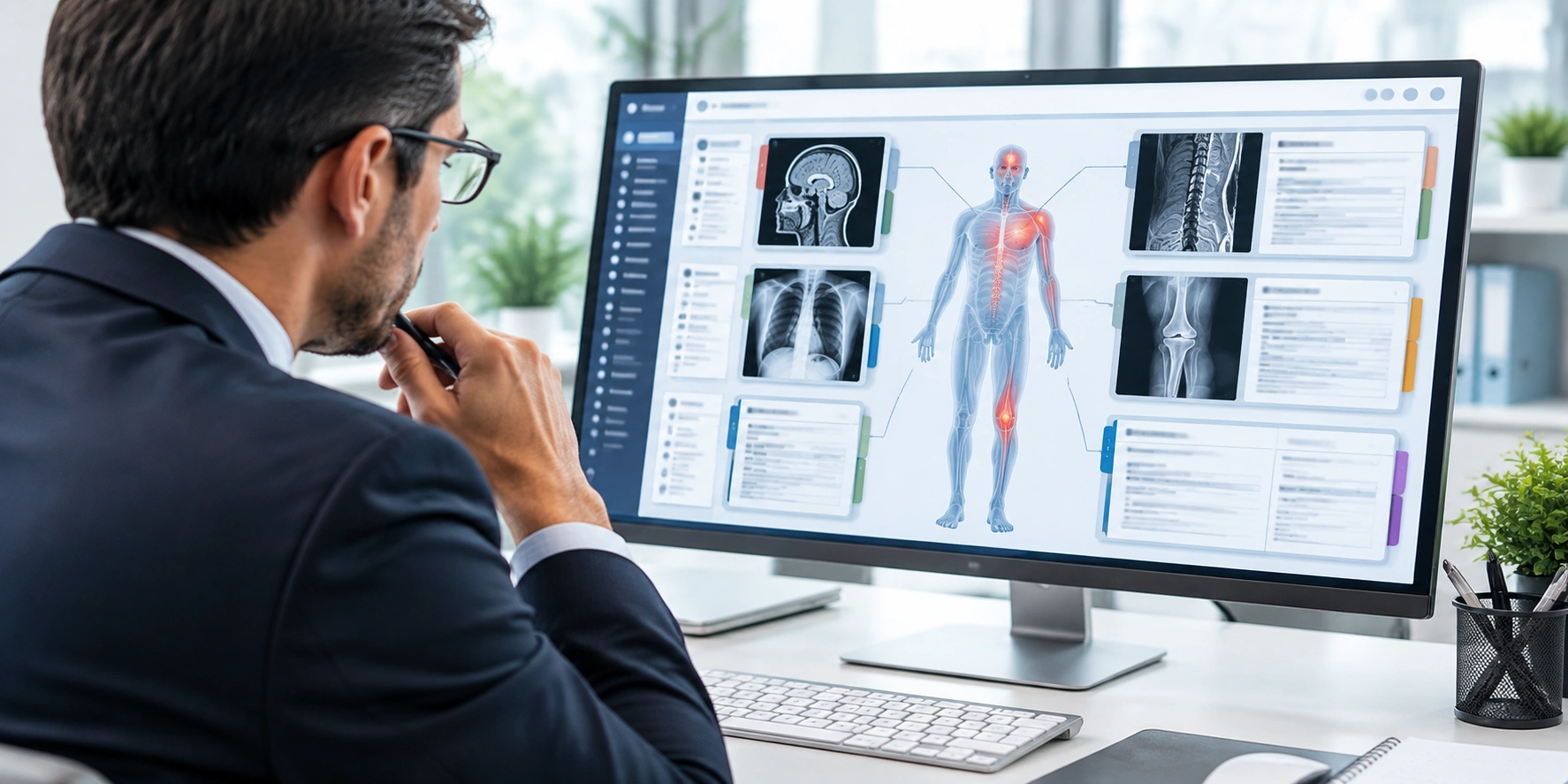
Here is the grounding. A medical record review reads, organizes, and cross-references a claimant's documented care and flags what matters, sourced to the page. For a manufacturer's in-house legal, claims, or risk team, and for the defense counsel working with them, that review turns a stack of unfamiliar clinical records into a clear read of what the file supports. It does not decide liability or defect. It gives the people who do a factual footing they can trust.
Manufacturers are evaluating more injury claims than ever
Product liability matters drove federal civil filings up 22% in the year ending March 2024, to 347,991 (U.S. Courts). Every one of those claims is a medical record a manufacturer has to evaluate before it decides how to respond.
Is the product actually in the story?
The first thing the records tell a manufacturer is whether its product is even part of the documented history. In a drug or device claim, the file should show the prescription, the implant, or the exposure, ideally with dates. In other product claims, the records and the history taken by treating providers show what the patient reported using and when. When that link is thin or absent, the claim has a threshold problem, and the manufacturer learns it from the records rather than from a surprise at deposition. Confirming product involvement against the documented history is the first read, and it shapes every decision after it.
Is the alleged injury real and documented?
The second read is whether the claimed injury actually appears in the treating records, and in what form. A demand can describe a serious, lasting harm that the contemporaneous chart documents more modestly, differently, or not at all. The review reports what the records document about the injury, quoted and cited, so the manufacturer's team is comparing the claim to the medical facts rather than to the claim's own description of them. That comparison is often where a claim's real value starts to come into focus.
Evaluating an injury claim and need the medical facts read cleanly first?
Does the timeline hold, and is there another explanation?
The third read is the sequence, and it is where many product claims are won or lost. Placed in date order, the records show whether the injury followed the product or predates it, and whether a documented alternative cause, a prior condition, a different exposure, a known risk factor, is already sitting in the chart. For a manufacturer, an onset that lands before the product, or a competing cause already documented, is exactly what its counsel and experts will want early. The review surfaces and flags these facts and cites them. Whether they defeat causation is the expert's and the attorney's determination, not the review's. The same discipline is what lets a review identify contradictions in product liability medical evidence.
What does the record actually support on damages?
The fourth read is a reality check on scope. A claim asserts a level of treatment, disability, and ongoing care; the records document what was actually diagnosed, treated, and followed. Reading the two against each other shows a manufacturer where the documented harm matches the claim and where it does not, which is central to evaluating exposure. The review does not assign a dollar value or decide what the claim is worth. It lays out what the records support, so the people who value the claim are working from the file rather than the framing.
For a manufacturer, an injury claim is only as strong as the records behind it. The review is how you learn which claims those are before you respond.
Consistency across a claims portfolio
Manufacturers rarely evaluate one claim in isolation. A product line can draw many claims at once, and evaluating them well means reading each one to the same standard, so an admission, a prior condition, or a missing link is captured the same way across the portfolio. That consistency is what lets a manufacturer triage claims sensibly, defend some, investigate others, resolve the rest, without the outcome depending on who happened to read which file. It is the same benefit behind structured medical record review supporting consistent claim evaluation, applied to a manufacturer's inventory of injury claims.
AI has a real role here, within limits. It can index large record sets, line up dates against product use, and surface likely issues across many claims faster than a person alone, which matters when the volume is high. What it cannot reliably do is read clinical context, tell a genuine admission from a hedge, or judge whether an apparent alternative cause truly conflicts with the claim. A dependable manufacturer-side review pairs AI throughput with a trained medical reviewer who checks each flagged fact against the source.
One boundary holds all of this together. A medical record review organizes, cross-references, and flags what the records document, and it cites the source. It does not decide whether the product was defective, whether it caused the injury, who is liable, or what a claim is worth. Those determinations belong to the manufacturer's attorneys and retained experts. The review's job is to make the documented medical facts complete, neutral, and traceable, so the manufacturer evaluates each claim on the record rather than on the demand.
What the records tell a manufacturer about a claim
347,991
Civil cases filed, FY2024
Product liability drove a 22% rise in federal civil filings that year. (U.S. Courts)
4
Reads that shape the response
Product involvement, documented injury, timeline and alternative cause, and documented damages.
1
Question that starts it
Do the records document that this product was involved in this injury at all?
Frequently Asked Questions
How do medical records help a product manufacturer evaluate an injury claim?

They show what was actually documented, rather than what the demand asserts: whether the product was used or involved, whether the injury appears in the treating records, how the timeline runs, whether an alternative cause is documented, and what the records support on treatment and damages. That gives the manufacturer a factual basis to decide how to respond.
What is the first thing a manufacturer should look for in the records?
Whether the product is even in the documented history. In a drug or device claim the file should show the prescription, implant, or exposure; in other claims the treating history shows what the patient reported using. A thin or absent link is a threshold issue worth knowing early.
Does a medical record review decide whether a product caused an injury?
No. The review organizes and flags what the records document and cites the source. Whether the product was defective, whether it caused the injury, who is liable, and what a claim is worth are determinations for the manufacturer's attorneys and retained experts.
How do records help identify an alternative cause?
By placing the documented history in date order and flagging prior conditions, other exposures, and known risk factors already in the chart. An onset that predates the product or a competing documented cause is exactly what a manufacturer's counsel and experts will want to see early.
How does record review help a manufacturer evaluate many claims at once?
It reads each claim to the same standard, so an admission, a prior condition, or a missing product link is captured consistently across the portfolio. That consistency lets the manufacturer triage which claims to defend, investigate, or resolve without the outcome depending on who read which file.
Can AI evaluate injury-claim records on its own?
AI can index records and surface likely issues across many claims quickly, which helps at volume. It can misread clinical context or a hedge, so a trained medical reviewer confirms each flagged fact against the source before it informs a claim decision.
For a product manufacturer, evaluating an injury claim starts with the medical records, because they say what the demand cannot: whether the product is in the documented story, whether the injury is real and recorded, whether the timeline and any alternative cause hold, and what the file actually supports on damages. Read each claim to that standard, and a manufacturer decides how to respond from the record instead of from the framing, and decides it the same way across every claim in the line.
Ready to evaluate your injury claims on a clean, sourced read of the medical facts? Partner with LezDo TechMed, or estimate a review and see what the records say before you decide how to respond.
Source Credit : All metrics derived from LezDo TechMed’s internal project data.
Anjana Devi Vijay
Anjana Devi Vijay is a Certified Legal Nurse Consultant (CLNC) and Medical–Legal Research Analyst with 9+ years of experience in medical record review, deposition summary analysis, and medico-legal research. She specializes in transforming complex healthcare documentation into accurate, actionable insights that support attorneys, insurers, and medical evaluators. With expertise in clinical documentation analysis and legal case support, she creates research-driven content focused on improving decision-making and case outcomes.












.png)